
A blog about my life experiences and what they have taught me
Explore by what you’re experiencing
You might arrive here feeling stressed, afraid, sad, angry or lost—or simply wanting to be more present. These reflections come from my own life. Choose what feels close to your experience, and begin there.
These are personal reflections, not treatment guides. Some essays discuss childhood abuse, grief or severe distress; notes beside those links can help you choose what to read.
Choose a topic to open its article list.
Fear & anxiety8 essays
Reflections on fear, avoiding difficult feelings and learning to reach for support.
- F.E.A.R.
My personal story of fear, anxiety and the support that helped me begin to live differently.
Includes childhood sexual abuse and legal proceedings. - RUNNING
My experience of staying busy to avoid difficult feelings, and eventually turning towards them.
Includes childhood abuse and severe emotional distress. - REMEDY
My experience of running from emotional pain and beginning to listen to it.
- VULNERABLE
Learning to let trusted people see what I was really feeling.
Includes childhood trauma and severe emotional distress. - SURRENDER
My experience of trying to control outcomes and learning to hold them more lightly.
- QUOTES THAT HAVE CARRIED ME, Part II
Words I have returned to when overwhelmed, fearful or facing the unknown.
Includes childhood sexual abuse and severe emotional distress. - QUOTES THAT HAVE CARRIED ME, Part I.
Words that accompanied me through uncertainty, change and the early years of healing.
Includes childhood sexual abuse. - BREAK TO HEAL, Part I.
The first part of my healing story: severe distress, asking for help and beginning to speak.
Includes childhood sexual abuse, severe distress and medication choices.
Stress & pressure8 essays
When achievement, perfectionism or busyness begin to crowd out joy.
- FROM STRESS TO SURRENDER
How I began rebuilding my relationship with dance after it became a source of stress.
- STRESS
Achievement pressure, children’s self-worth and preserving the joy of play.
Includes severe emotional distress. - PERFECTION
The cost of needing to be the best, and learning to make room for imperfection.
Includes childhood sexual abuse and severe emotional distress. - WINNING
Separating the desire to win from the need to prove our worth.
Includes childhood sexual abuse. - SLOW
Noticing the connection, play and everyday moments that become available when I slow down.
- RETREAT
A very short invitation to step back from busyness, then re-engage.
- MUSIC, MOVEMENT + ME
My changing relationship with music and dance, through pressure, loss and rediscovered joy.
Includes childhood sexual abuse and severe emotional distress. - HAPPINESS IS OVER THERE.
What I found after achievement did not bring the fulfilment I expected.
Sadness & finding hope7 essays
Personal stories of feeling low, meeting emptiness and beginning to see a way forward.
- UP + DOWN
A personal reflection on sadness, joy and life’s changing emotional weather.
- EMPTY
Meeting a sense of emptiness and the question, “What’s the point?”
- DEPRESSION
My personal experience of depression, the search for support and my own treatment choices.
Includes childhood sexual abuse and medication choices. Personal experience, not a treatment guide. - RUNNING
My experience of staying busy to avoid difficult feelings, and eventually turning towards them.
Includes childhood abuse and severe emotional distress. - BREAK TO HEAL, Part II.
The second part of my healing story: disclosure, support and beginning a different life.
Includes childhood sexual abuse, severe distress and treatment experiences. - BREAK TO HEAL, Part III.
The third part of my healing story: a new life in Hawaiʻi and finding my way back to dance.
Includes childhood sexual abuse. - A FEATHER...
A spiritual reflection on sadness, anxiety and emotional turbulence.
Anger & reactivity4 essays
Reflections on suppressed feelings, emotional expression and the pain that can sit beneath anger.
- ANGER
My experience of suppressing anger and learning to express it with more awareness.
Includes childhood sexual abuse and expressions of anger. - SHAME
My experience of shame, feeling like an imposter and being hard on myself.
Includes childhood sexual abuse. - BE A MAN
Questioning ideas of manhood that leave little room for feelings or vulnerability.
Includes childhood sexual abuse and homophobia. - FORGIVENESS
Discovering how much harder it was to offer compassion and forgiveness to myself.
Includes childhood sexual abuse.
Comparison6 essays
When someone else’s success starts to feel like a measure of your own worth.
- ENOUGH
The anxiety of measuring myself against others, and learning to celebrate their success.
Includes severe emotional distress. - WINNING
Separating the desire to win from the need to prove our worth.
Includes childhood sexual abuse. - PERFECTION
The cost of needing to be the best, and learning to make room for imperfection.
Includes childhood sexual abuse and severe emotional distress. - FROM STRESS TO SURRENDER
How I began rebuilding my relationship with dance after it became a source of stress.
- STUFF
Questioning how possessions shape our worth, time and attention.
- HAPPINESS IS OVER THERE.
What I found after achievement did not bring the fulfilment I expected.
Feeling not good enough13 essays
Worth, approval, perfectionism and the effort to keep proving ourselves.
- PROVE
What changes when we act from worth instead of trying to prove it?
Includes childhood trauma. - VALIDATION
The exhausting search for approval and learning to act from a sense of worth.
- MY BEST
A brief reminder that our best changes from day to day.
- PERFECTION
The cost of needing to be the best, and learning to make room for imperfection.
Includes childhood sexual abuse and severe emotional distress. - SHAME
My experience of shame, feeling like an imposter and being hard on myself.
Includes childhood sexual abuse. - WINNING
Separating the desire to win from the need to prove our worth.
Includes childhood sexual abuse. - ENOUGH
The anxiety of measuring myself against others, and learning to celebrate their success.
Includes severe emotional distress. - INSIDE OUT
Beginning with how we want to feel, rather than what we think we must achieve.
- INSIDE JOB
Looking inward for the worth and fulfilment I kept seeking outside myself.
- WHAT IF?
Questions about worth, competition and a life with less to prove.
- 2019
A new-year reflection on making inner wellbeing and connection part of our goals.
- HAPPINESS IS OVER THERE.
What I found after achievement did not bring the fulfilment I expected.
- YOU
A spiritual reflection on a sense of self beyond painful experiences and changing circumstances.
Being more present10 essays
Slowing down, listening and noticing the life happening around us.
- SLOW
Noticing the connection, play and everyday moments that become available when I slow down.
- MORE OR LESS
A short poem on busyness, wanting more and missing the life already here.
- PATIENCE
Practising patience when attention keeps rushing towards a better future.
Includes childhood abuse and neglect. - LISTEN
The difference it makes to feel heard without someone rushing to fix us.
Includes childhood sexual abuse. - RETREAT
A very short invitation to step back from busyness, then re-engage.
- GRATITUDE
The small, everyday gratitude practices I have found meaningful.
- REVELATIONS FROM BEYOND
A vivid dream and a renewed wish to appreciate the people and moments in my life.
Includes a dream about a child’s death. - STUFF
Questioning how possessions shape our worth, time and attention.
- PROGRESS IS NOT LINEAR
A labyrinth walk and a kinder perspective on returning to familiar struggles.
- SURRENDER
My experience of trying to control outcomes and learning to hold them more lightly.
Life transitions10 essays
Changing roles, endings, new beginnings and a life that no longer fits the same way.
- IDENTITY
Who are we beyond the roles we play, especially when those roles change?
- Creation - Maintenance - Destruction
A spiritual reflection on endings, new beginnings and moving with change.
Includes discussion of serious illness and death. - BREAK TO HEAL, Part II.
The second part of my healing story: disclosure, support and beginning a different life.
Includes childhood sexual abuse, severe distress and treatment experiences. - BREAK TO HEAL, Part III.
The third part of my healing story: a new life in Hawaiʻi and finding my way back to dance.
Includes childhood sexual abuse. - MUSIC, MOVEMENT + ME
My changing relationship with music and dance, through pressure, loss and rediscovered joy.
Includes childhood sexual abuse and severe emotional distress. - HAPPINESS IS OVER THERE.
What I found after achievement did not bring the fulfilment I expected.
- LET THE HARD TIMES ROLL
My reflections on painful changes and the growth I found within them.
Includes childhood sexual abuse and severe emotional distress. - THE DUST OFF
My perspective on apparent setbacks and returning to old patterns during change.
Includes childhood abuse and severe emotional distress. - SURRENDER
My experience of trying to control outcomes and learning to hold them more lightly.
- PREFERENCE vs EXPECTATION
Holding a meaningful desire more lightly as plans and circumstances change.
Feeling lost7 essays
Questions about identity, meaning, what matters and where to go next.
- IDENTITY
Who are we beyond the roles we play, especially when those roles change?
- EMPTY
Meeting a sense of emptiness and the question, “What’s the point?”
- WHY?
Revisiting the reasons behind what we do when they no longer feel meaningful.
- INSIDE OUT
Beginning with how we want to feel, rather than what we think we must achieve.
- INTUITION
Listening inward when speculation and other people’s opinions become overwhelming.
- INDECISION
A seven-day experiment in listening inward and moving beyond indecision.
- HAPPINESS IS OVER THERE.
What I found after achievement did not bring the fulfilment I expected.
Feeling stuck7 essays
Repeating patterns, uncertainty and the possibility of beginning again.
- PROGRESS IS NOT LINEAR
A labyrinth walk and a kinder perspective on returning to familiar struggles.
- THE DUST OFF
My perspective on apparent setbacks and returning to old patterns during change.
Includes childhood abuse and severe emotional distress. - RUNNING
My experience of staying busy to avoid difficult feelings, and eventually turning towards them.
Includes childhood abuse and severe emotional distress. - INDECISION
A seven-day experiment in listening inward and moving beyond indecision.
- PREFERENCE vs EXPECTATION
Holding a meaningful desire more lightly as plans and circumstances change.
- WHY?
Revisiting the reasons behind what we do when they no longer feel meaningful.
- BREAK TO HEAL, Part III.
The third part of my healing story: a new life in Hawaiʻi and finding my way back to dance.
Includes childhood sexual abuse.
Shame & self-compassion7 essays
Feeling flawed, being hard on ourselves and exploring a kinder relationship within.
- SHAME
My experience of shame, feeling like an imposter and being hard on myself.
Includes childhood sexual abuse. - FORGIVENESS
Discovering how much harder it was to offer compassion and forgiveness to myself.
Includes childhood sexual abuse. - MY BEST
A brief reminder that our best changes from day to day.
- PERFECTION
The cost of needing to be the best, and learning to make room for imperfection.
Includes childhood sexual abuse and severe emotional distress. - BE A MAN
Questioning ideas of manhood that leave little room for feelings or vulnerability.
Includes childhood sexual abuse and homophobia. - BREAK TO HEAL, Part I.
The first part of my healing story: severe distress, asking for help and beginning to speak.
Includes childhood sexual abuse, severe distress and medication choices. - BREAK TO HEAL, Part II.
The second part of my healing story: disclosure, support and beginning a different life.
Includes childhood sexual abuse, severe distress and treatment experiences.
Grief & loss2 essays
Personal reflections on bereavement and the love that remains.
- FATHER FIGURE
Remembering my father, grieving his death and carrying his lessons into my own parenting.
Includes suicide loss and childhood sexual abuse. - LESSONS OF LOVE
The relationships that have shaped my understanding of love, loss and connection.
Includes childhood sexual abuse and bereavement.
Connection & vulnerability6 essays
Being heard, letting trusted people in and making room for honest relationships.
- VULNERABLE
Learning to let trusted people see what I was really feeling.
Includes childhood trauma and severe emotional distress. - LISTEN
The difference it makes to feel heard without someone rushing to fix us.
Includes childhood sexual abuse. - BE A MAN
Questioning ideas of manhood that leave little room for feelings or vulnerability.
Includes childhood sexual abuse and homophobia. - LESSONS OF LOVE
The relationships that have shaped my understanding of love, loss and connection.
Includes childhood sexual abuse and bereavement. - LOVED & LOATHED
Finding the courage to speak honestly when approval is uncertain.
- LIGHT + SOUND
A message of solidarity for survivors of childhood abuse and the people who love them.
Includes childhood abuse and references to suicidal thoughts.
-
2023
1
- Jun 23, 2023 WINNING
-
2022
3
- Feb 9, 2022 Creation - Maintenance - Destruction
- Jan 29, 2022 POVERTY CONSCIOUSNESS
- Jan 10, 2022 ANGER
-
2021
6
- Dec 12, 2021 EMPTY
- Jul 25, 2021 PATIENCE
- May 18, 2021 INTUITION
- Mar 22, 2021 MORE OR LESS
- Feb 1, 2021 PERSPECTIVE
- Jan 14, 2021 REMEDY
-
2020
8
- Nov 13, 2020 INDECISION
- Nov 6, 2020 PREFERENCE vs EXPECTATION
- Sep 12, 2020 YOU
- Aug 11, 2020 INSIDE JOB
- Jul 13, 2020 SHAME
- Feb 28, 2020 INPUT
- Feb 11, 2020 PROVE
- Jan 15, 2020 A FEATHER...
-
2019
12
- Dec 6, 2019 DEPRESSION
- Sep 10, 2019 IDENTITY
- Sep 3, 2019 SPEECH
- Aug 19, 2019 OWNERSHIP II
- Aug 17, 2019 OWNERSHIP I
- Aug 1, 2019 FROM STRESS TO SURRENDER
- Jun 14, 2019 PROGRESS IS NOT LINEAR
- May 8, 2019 RUNNING
- Apr 2, 2019 LIGHT + SOUND
- Mar 16, 2019 WHAT IF?
- Mar 2, 2019 LEAVING NEVERLAND
- Feb 19, 2019 PLATFORM
-
2018
31
- Dec 28, 2018 2019
- Nov 25, 2018 INSIDE OUT
- Nov 5, 2018 WHY?
- Oct 13, 2018 VULNERABLE
- Sep 29, 2018 GRATITUDE
- Sep 14, 2018 SLOW
- Aug 31, 2018 SUFFERING
- Aug 16, 2018 THE DUST OFF
- Jul 15, 2018 SURRENDER
- Jul 6, 2018 BE A MAN
- Jun 30, 2018 WHY ME?
- Jun 22, 2018 STUFF
- Jun 8, 2018 VALIDATION
- May 24, 2018 LOVED & LOATHED
- May 18, 2018 UP + DOWN
- Apr 28, 2018 MY BEST
- Apr 20, 2018 MUSIC, MOVEMENT + ME
- Apr 13, 2018 ENOUGH
- Apr 6, 2018 FORGIVENESS
- Mar 30, 2018 REVELATIONS FROM BEYOND
- Mar 23, 2018 LET THE HARD TIMES ROLL
- Mar 16, 2018 TALKS THAT HAVE CARRIED ME, Part II
- Mar 10, 2018 TALKS THAT HAVE CARRIED ME, Part I
- Mar 2, 2018 LESSONS OF LOVE
- Feb 16, 2018 PERFECTION
- Feb 8, 2018 BOOKS THAT HAVE CARRIED ME, PART I
- Feb 1, 2018 TO THOSE WHO HATE ME
- Jan 26, 2018 STRESS
- Jan 19, 2018 F.E.A.R.
- Jan 11, 2018 LISTEN
- Jan 5, 2018 FATHER FIGURE
-
2017
7
- Dec 29, 2017 RETREAT
- Dec 22, 2017 HAPPINESS IS OVER THERE.
- Dec 15, 2017 QUOTES THAT HAVE CARRIED ME, Part II
- Dec 8, 2017 BREAK TO HEAL, Part III.
- Dec 1, 2017 QUOTES THAT HAVE CARRIED ME, Part I.
- Nov 24, 2017 BREAK TO HEAL, Part II.
- Nov 17, 2017 BREAK TO HEAL, Part I.








INDECISION
A seven-day experiment in listening inward, choosing with greater clarity, and taking the next step beyond endless speculation.
Indecision and its determiner, speculation, are major sources of human suffering: the coulda, woulda, shoulda’s, or the never-ending pros and cons list. Indecision causes stagnation in our life and stagnation brings about depression and destruction. Like the rest of the Universe, we need movement, flow and reciprocation. We do not want to WAIT in life, for anything, ever. We want to tune into our intuition and take action immediately. Now, we must also expand our definition of action: for example, sometimes the intuitive hit we’ll receive will be to rest for a moment and gather information, and if so, that is the immediate action we take.
THE DECISIVENESS DIRECTIVE | a 7-day experiment
You can start with smaller, more inconsequential choices:
Should I run or do Yoga?
Should I cook or order in?
Should I call or text?
Should I learn piano or photography?
Should I meditate or return emails?
Take at least 30 seconds to a minute for the following:
Get still and quiet, eyes closed, hand on your heart, and take some deep breaths. Then ask yourself: which choice contains the greater charm? Which choice pulls me towards it, just that little bit more?
The charming choice may or may not be the one that makes the most logical sense. For example, I’m sure you’ve had the following experiences: “It doesn’t make sense but for some reason, it just feels right,” or, “It makes all the sense in the world, but something about it doesn’t feel right.” That FEELING is what you are looking for. It will often show up in the chest or the gut, but it could also show up somewhere else in the body.
Once detected, drop the other choice like a hot potato, forget it and move immediately in the direction of the charm-containing choice. Ask yourself, “What action can I take, TODAY, however great or small, to move me in the direction of that greater charm?”
Now, let’s say you can’t yet detect which choice contains greater charm: the mind is still super loud, the pros and cons seem to be even, you’re afraid of both sets of cons, and you just can’t seem to make a choice: flip a coin or eeny, meeny, miny, moe it! Whichever one is chosen, drop the other choice like a hot potato and take immediate action towards the chosen choice. Do not speculate.
You may ask, “What if I make the wrong choice?” The great part is, there is no time machine for you to go back and experience how life would have been if you had made the other choice: you’ll never know! So leap into the choice that feels right in the moment and if you don’t like how it pans out, then make another choice. The alternative is to stagnate, speculate and suffer.
This is an experiment in order to gather your own evidence as to the outcomes and experience of your decisiveness. Then based on your evidence, you can then decide to start applying this method towards greater, more “consequential” choices:
Should I speak up or hold my tongue?
Should I move to a different state or stay here?
Should I quit or stay in my job?
Should I take this new opportunity or not?
Should I end or stay in this relationship?
Detect charm—Take Action.
At the end of life, we will not regret the things we tried that maybe didn’t work out.
Yet we may very well regret the things we never tried.
Waiting is over. It is time for charm-directed action.

PREFERENCE vs EXPECTATION
What changes when we follow our desires with an open hand, allowing life to unfold beyond the outcomes we imagined?
“In order to be disappointed, we must have an appointment.”
To have preferences in life is essential. Preferences motivate us to get out into the world and have evolutionary experiences. Expectations, on the other hand, are a whole different ball game. Neediness transforms a preference into an expectation. A preference says, “I would love for this circumstance to go a particular way, but if it doesn’t, I will be okay.” An expectation says, “I need for this circumstance to go a particular way, and if it doesn’t, I will not be okay.”
An expectation is predicated upon the belief that life happens TO us. A preference is predicated upon the belief that life happens FOR us. What do I mean by that? If we believe that the Universe is ultimately always moving in the direction of evolution: we receive a preference, we take action towards it, and if it “doesn’t work out,” believing that life happens FOR us, we become curious and maybe even excited as to what is going to happen next. We then adapt, flow with and evolve.
If we believe that life is ultimately chaos that we must try to manipulate in our favor via our flesh and blood: we create a needy expectation for a particular outcome, we move towards it, and if it “doesn’t work out,” we feel that we have failed, or others have failed us, or that we will be ruined, and that the universe is against us. We feel victimized and defeated; we tighten up, stagnate and deteriorate.
In a broader sense, it is true that what we expect, we experience. If we expect things to go “wrong,” no matter what actually happens, our overall experience will be one of things going “wrong,” i.e., waiting for the other shoe to drop. Yet, if we expect things to go “right,” no matter what actually happens, our overall experience will be one of things going “right,” i.e., “This is not what I wanted, but I trust that this experience is leading me towards what is actually more evolutionary.” One of the problems is that our expectations tend to be narrow, overly detailed and rigid, leaving no room for new knowledge to be received amidst new experiences. Rigidity blocks the natural evolution of our preferences.
My personal experience is as follows: the Universe speaks to us, via our preferences and aversions, in a language that we can understand, at the time. These preferences and aversions move us into action and therefore experiences, which expand our awareness, our knowledge, and ultimately our capability to process new language from the Universe, in the form of evolved preferences and aversions, which lead to new experiences: ad infinitum.
Most importantly, we want to first understand the core of our preferences by breaking them down to the key message. For example: take a detailed preference like, “I want to be a professional dancer in Hollywood, doing these kinds of jobs, dancing with these kinds of people, making this kind of money.” First, strip it down to something like, “I absolutely love to dance and I want to be able to spend my life doing it.” This is the motivational core.
Then, it’s absolutely okay to add those detailed preferences back on top and move towards them, but if we are rigidly attached to the detailed preferences, if they become needy expectations, there is a very good chance that once we start having dance experiences, and if things don’t seem to be working out in Hollywood, or with those kinds of jobs, or those kinds of people, we are going to feel defeated, stuck and victimized: as if the entire preference and course of action was a mistake.
Whereas, with a less rigid set of expectations, if the details of your preferences don’t seem to be working out, you can come back to your core preference, “I absolutely love to dance and I want to spend my life doing it,” and open yourself up to continued Universal guidance. Maybe there is some other place or some other group of people or some other way for you to spend your life dancing? A way you never could have realized until you first followed your original preference and had a set of experiences which expanded your awareness and capability to process and apply a more evolved version, for you, of your original preference. Then we can take an approach like, “Universe, I surrender the details. I am available. Show me how, when, where and the next action to take.”
Maybe the next most evolutionary experience for you is to dance in NYC off-Broadway, or choreograph music videos in India, or dance in Brunei—who knows? Yet most likely, you wouldn’t be able to receive, process and take action on those expanded preferences until you first took action towards the original Hollywood dance preference.
Once we can let our dreams unfold via their natural drip method: preference | action | experience - upgraded preference | action | experience, we’ll create a lot less friction in our life, and we’ll stop pressing the snooze button on the wake-up calls from the Universe. We’ll finally stop feeling exhausted by pushing and actually feel energized by being pulled.
All of my love, Wade.

YOU
An invitation to look beyond changing thoughts, feelings, and circumstances toward a sense of self that suffering cannot define.
No matter what has happened to you, YOU are not broken. YOU cannot be broken.
How is that possible? Let’s start by asking: who are YOU?
Are you your body, thoughts, emotions and circumstances, when all of them have done nothing but change since the day you were born? Your body, thoughts, emotions, and circumstances cannot even begin to tell the complete story of who you are.
Who are you then? Well, who is the you that has been aware of your body, thoughts, emotions and circumstances all along? If you can be aware of having a thought, who is the you that is aware of having a thought? That begins to get us much closer to comprehending the complete story of who you are.
In order for there to be form, there must first be space. In order for there to be sound, there must first be silence. In that same way, in order for there to be physical matter, there must first be consciousness. Like energy, consciousness can neither be created nor destroyed; consciousness can only be transferred or changed from one form to another. Consciousness is the infinite, inexhaustible source of everything, including you.
This brings me back to my opening statement: No matter what has happened to you, YOU are not broken. YOU cannot be broken. You, as a human, CAN be covered in muck or shrouded by clouds, so to speak, but who you truly are still remains untarnished underneath. The work to be done is not to repair you, but to remove the muck and clouds that are covering you up, in order for the glory of who you are to shine through again.
How do you remove the muck and clouds? Are you meditating daily? Are you going to therapy? Are you journaling? Are you reading inspirational personal growth material? Are you eating healthy? Are you exercising? Are you spending time in nature? Are you exploring forgiveness? Are you practicing love?
If you are able and your answer is no to any of the above questions, you may not be doing the work required to remove the muck and clouds. And if you’re not doing the work, your experience may seem to be one of being broken. That is not an experience of your truth and you deserve to experience your truth.
All of my love, Wade.


INSIDE JOB
A reflection on turning inward for the love, worth, and fulfillment we so often search for in the world.
Anything you think you need "out there," the actual source of it is inside of you: love, worth, respect, validation, safety, happiness, you name it.
How do I truly know this for myself?
Try over and over again to sustainably find one of the above via external acquisition such as money, success, sex, romance, food, diets, workouts, houses, cars, stuff, medication, lawsuits, arguments, likes and follows. Evidence gathered? Next:
How do I find it inside of me?
Meditate, daily.
Engage in insight-oriented therapy, if you have access to it, and/or find a mentor/coach/teacher.
Listen to and read tons of mental, emotional and spiritual growth material.
Journal regularly.
Cleanse and heal the body temple.
And not merely one of the above—all of the above.
Let’s say I find what I need inside of me, what then?
Now that you are no longer fruitlessly looking for fulfillment from the world, you can bring your fulfillment to the world, via your relationships, work, and art.
How do I make other people understand?
You don’t. You do you. They’ll notice. They’ll inquire. You’ll respond accordingly.
Summary:
What you’re looking for is what you're looking with.
All of my love. Aloha, Wade.


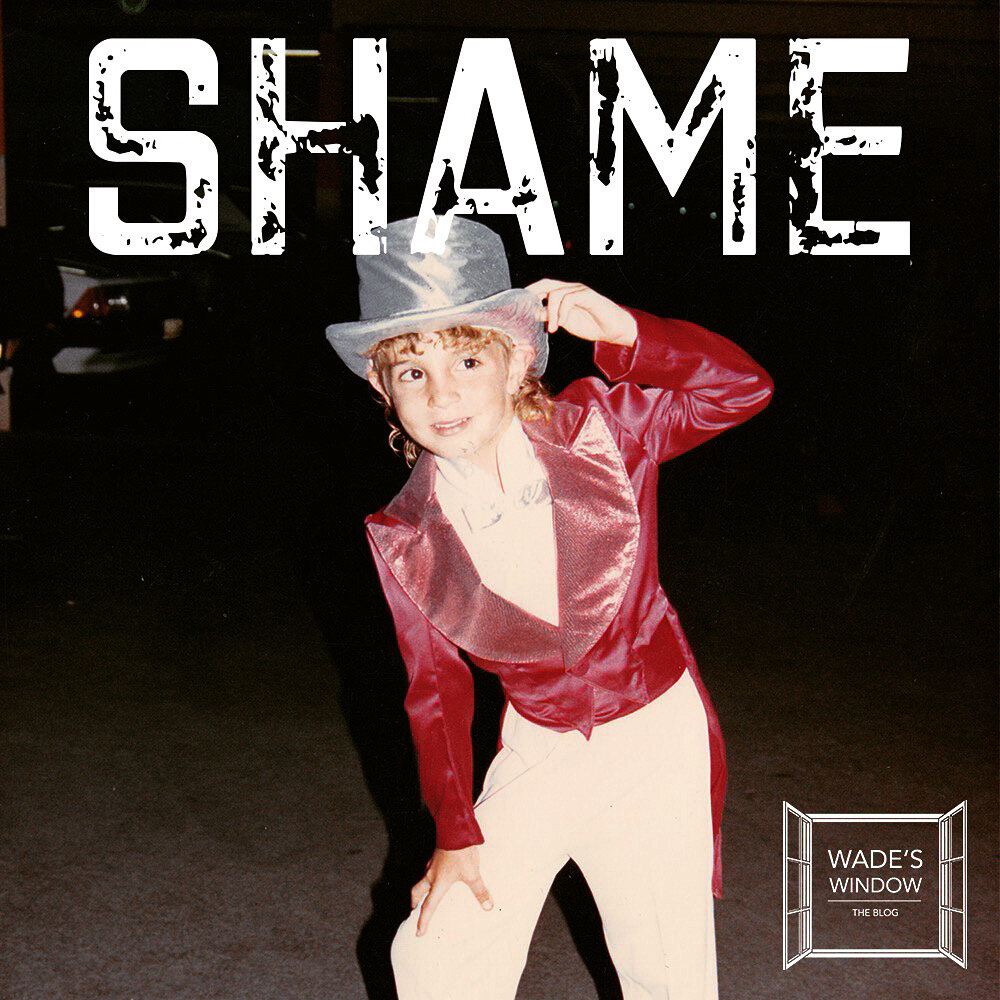
SHAME
Wade reflects on loosening the grip of shame and learning that our wounds and imperfections do not define our worth.
Through my teens and twenties, no matter how impressive I may have seemed, how much praise, fame or money I received, I never felt like I was good enough. I felt like I was an imposter and that it was only a matter of time before I was found out. Found out for what? I didn’t know.
After disclosing the abuse that I experienced as a child and beginning my healing process, I realized that although I didn’t know it, I had been living under the tyranny of shame for a long time. I had some abstract sense that beneath all of the external shine, something about me, somewhere deep down, I was bad, I was weird, I was wrong.
Through my healing process, I realized that one aspect of it was that I had been ashamed of my seemingly willing participation in my abuse and my desire as a child for it to keep happening. I came to understand that this desire was, in part, due to the attention and what I thought was “love” the abuse awarded me from my abuser: this man that I loved.
Shame is heavy, dark, messy, confusing and painful.
Unbeknownst to me, that sense of shame had permeated every aspect of my life. One of the ways it showed up was my being so incredibly hard on myself: emotionally and mentally beating myself to a pulp, as I believed that nothing I ever did was good enough.
I discovered that often when great anger would arise in me, what was really beneath it was shame. The anger was a defense mechanism, an attempt to numb and protect myself from the agony of shame. But of course, the anger would only lead to thoughts, words and actions which perpetuated more shame: a vicious cycle.
I love how Brené Brown speaks about the difference between guilt and shame: Guilt is “I did something bad.” Shame is “I am bad.”
The pains and traumas of our lives leave stains that manifest in many ways, some of which appear as distorted beliefs about ourselves and the world. These stains cannot be removed by topical cleaning agents: deep cleaning is required. Gratefully, due to the miracles of daily meditation, therapy and mental correction, that shame is being destroyed and eradicated from my life. It has no home here anymore.
I fell into anger a couple of weeks ago. I said and did some things I’m proud of. I said and did some things I’m not proud of. I have some guilt for that, but I do not have shame. “I’m imperfect and I’m enough.”
We’re so much bigger than the worst thing we’ve ever thought, said or done. We’re so much bigger than the worst thing that’s ever happened to us.
Our body, emotions, thoughts and circumstances are a part of our human experience, but who we truly are, the consciousness that precedes, pervades and prevails the flesh, is infinite, untarnished, and always available to provide us with an inexhaustible source of healing and love.
Maybe some bad things have happened to you.
Maybe you’ve thought, said or done some bad things.
But at your core, you are not bad.
You are pure potential.
All of my love, Wade.

INPUT
A one-week experiment in choosing what nourishes our minds, hearts, and bodies—and noticing how those choices shape our lives.
If we put Coca-Cola into our car's gasoline tank, it’s not going to run very well. Correspondingly, what we choose to allow into our mind, heart and body directly affects the state of our mind, heart and body. If we constantly fill our mind with negative, violent, depressing, petty or irreverent content from TV shows, the news, movies, music, books, the internet, and other people, this is the fuel our mind is running on. Why then should we be surprised if our mind is filled with fear, anger, apathy, distrust, jealousy, violence, sadness, etc.?
If we constantly fill our bodies with junk, why then should we be surprised if our bodies always feel tired, stiff, painful and riddled with disease?
If we constantly fill our hearts with negative beliefs and self-talk, if we don’t take the time to work on our own self-healing, if we won’t let love in, why then should we be surprised if our hearts feel depressed, scared, and lonely?
It is up to us. What do we choose to allow into our mind, heart and body?
If you feel any of the above symptoms, I’d like to suggest a research experiment:
ONE WEEK
1)
Remove all external content that is filled with any form of negativity or irreverence. That includes movies, TV shows, music, the news, books, YouTube, social media, podcasts, commentary from other people, you name it. 1 for 1, replace it with only positive and inspiring content.
2)
Every time a negative thought arises in your mind, replace it with a positive thought. Maybe one of gratitude. Maybe find something, anything positive about that person you love to hate, especially if that person is yourself. You may not FEEL or BELIEVE the positive thought at first, but allow yourself to entertain it anyway; let it start as an intellectual exercise.
3)
Remove at least half, if not all, of the low-quality food and drink that you put into your body. Maybe the fast food, or excessive sugar, or caffeine, nicotine, or other drugs? Replace it 1 for 1 with natural, whole foods, such as fruits, vegetables, legumes, nuts, seeds, green juice, water, etc.
See how you feel, then adjust your input criteria accordingly.
Input directly affects output. Output directly affects input. In an endless loop.
Let’s choose what we let into our life so that we can better choose what we put out into the world.
Wishing you health, love + peace…
Aloha, Wade.

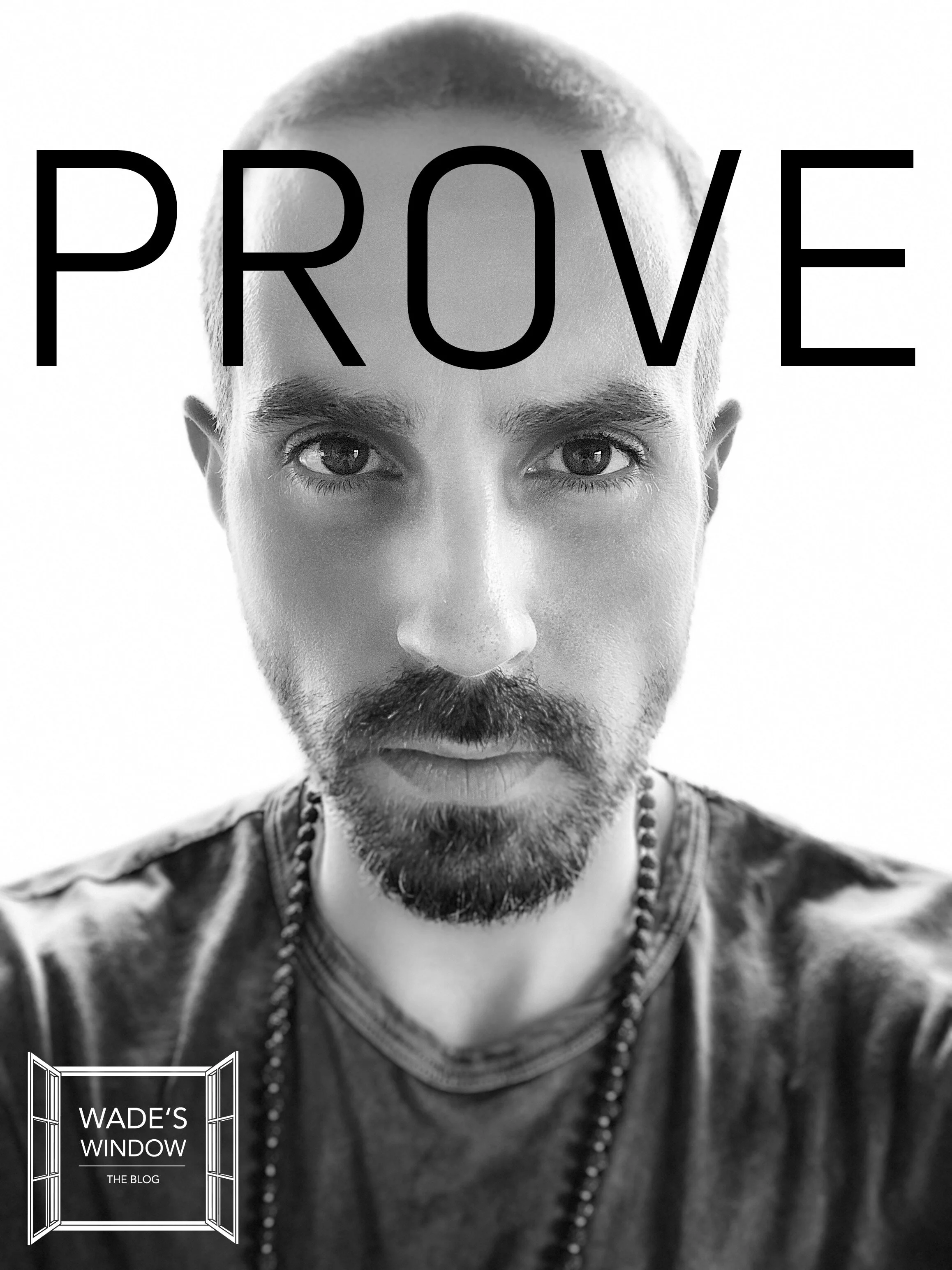
PROVE
What becomes possible when we act from a sense of worth, rather than spending our lives trying to prove it?
Feeling not good enough
When nothing you achieve seems to quiet the feeling that you’re not enough, the search for approval can become exhausting. Here, I reflect on learning to act from worth instead of endlessly trying to prove it.
Do you ever feel like you have to prove yourself to someone or something?
I’m not talking about merely proving your capability at a job or task but about a deep need to prove your very worthiness as a human being.
Maybe to a parent, sibling, romantic partner, friend, teacher, company, boss, colleague, your social media network, and/or the world at large?
I was operating from that place for many years, yet consequently, no matter how much praise and external validation I received from the world (and I received a lot), it was never enough. Never enough to change my fundamental distorted belief that at my core, I was not enough. It was not until, due to the expressed surfacing of childhood trauma, all of the external elements of my life that I believed would someday make me feel worthy disintegrated, that I finally ceased looking for my worth where it never was and never will be located: ANYWHERE OUT THERE. I then began to look inside of myself for a source that is there before, during, and after any action I may take and any outcome it may produce.
That search led me to the question: What if there is nobody and no being, EVER, that we have to prove anything to?
If that’s the case, the next big question is, what then is my motivation and intention for any action that I may take in life?
If there is nothing we have to prove, it seems to me that what's left is:
What and who do I love?
What and who truly mean something to me?
How do I choose to spend my time/my life?
I think most of us are taught that in order to do good, we need some sort of external source of pressure, stress, or fear. Maybe this comes from a fundamental belief that humans are inherently “bad” or “sinful,” therefore unless we are fearful of condemnation and punishment, we will most likely do the “wrong” or “bad” thing. Personally, I do not subscribe to this narrative. I don’t think we've come here to earth to try and get approval from some anthropomorphic deity as if human life is some sort of testing ground for something greater. I think we’re eternally pre-approved and that’s why we’re here.
I do believe that if a human being is unloved, abused, neglected, victimized, or treated unfairly, it will have natural consequences that, if untreated, unprocessed and unhealed, may cause someone to act out from a place of lack, pain, confusion, anger, trauma and distortion. Yet if one either did not receive any of the above unjust treatment or has processed and healed from it accordingly, when one truly loves someone or something, one naturally evolves to do “good,” to do their best, simply because it’s what feels good and right.
If one is taught and shown from a young age that they are not enough, one will act from a poverty-stricken state of mind. Yet if one is taught and shown, especially from a young age, that at their baseline, they are enough, they are worthy, one will naturally bring their sense of being enough, of being worthy, to their actions.
So what if, instead of taking action in order to feel worthy, we could fundamentally know that we are worthy and enough, and then from that place, take action?
I believe we would inhabit a world that looks and feels quite different from the one we currently do. For one thing, our actions would be based more upon what we can give, rather than what we can get.
You have breath; you are alive; therefore…you are worthy and you are enough.
In gratitude and love…
Aloha, Wade.

If you’d like support
If this feels familiar, you don’t have to keep trying to prove your way into feeling enough. In Life Mentoring, we can explore what’s been driving that pressure and what a kinder relationship with yourself might look like.
Life Mentoring is coaching-based support, not psychotherapy or crisis care.

A FEATHER...
A spiritual reflection on surrender, emotional turbulence, and the possibility of finding guidance within every experience.
To be like a feather on the breath of the Divine: a vessel, set in motion purely by universal guidance. This is my deepest desire.
Yet sometimes I get frustrated, due to feeling like a feather in the wind, susceptible to the emotional charges of people, places or things.
But if, as all of the greatest spiritual traditions suggest, the Divine is all-powerful, all-knowing and present everywhere, always, how can anything that is experienced, anything that exists, be not Divine?
In that case, how could my sadness, confusion, irritation, anger, anxiety and longing be anything other than Divine?
How could the wind and I, the Feather, be anything other than the Divine?
If this is the case, it leads me to the following conclusions:
Every experience, everyone and everything is Divine.
Therefore, nothing can be off-path and nothing can go wrong.
Hence, 365 days a year, 24 hours a day, there is never anything else going on but evolution.
I like this conclusion and in my experience, I find it to be true.
What about you?
Love + Aloha, Wade.

THE GRAM


What if winning could become a path to growth, rather than a way to prove that we are worthy of love?