
A blog about my life experiences and what they have taught me
Explore by what you’re experiencing
You might arrive here feeling stressed, afraid, sad, angry or lost—or simply wanting to be more present. These reflections come from my own life. Choose what feels close to your experience, and begin there.
These are personal reflections, not treatment guides. Some essays discuss childhood abuse, grief or severe distress; notes beside those links can help you choose what to read.
Choose a topic to open its article list.
Fear & anxiety8 essays
Reflections on fear, avoiding difficult feelings and learning to reach for support.
- F.E.A.R.
My personal story of fear, anxiety and the support that helped me begin to live differently.
Includes childhood sexual abuse and legal proceedings. - RUNNING
My experience of staying busy to avoid difficult feelings, and eventually turning towards them.
Includes childhood abuse and severe emotional distress. - REMEDY
My experience of running from emotional pain and beginning to listen to it.
- VULNERABLE
Learning to let trusted people see what I was really feeling.
Includes childhood trauma and severe emotional distress. - SURRENDER
My experience of trying to control outcomes and learning to hold them more lightly.
- QUOTES THAT HAVE CARRIED ME, Part II
Words I have returned to when overwhelmed, fearful or facing the unknown.
Includes childhood sexual abuse and severe emotional distress. - QUOTES THAT HAVE CARRIED ME, Part I.
Words that accompanied me through uncertainty, change and the early years of healing.
Includes childhood sexual abuse. - BREAK TO HEAL, Part I.
The first part of my healing story: severe distress, asking for help and beginning to speak.
Includes childhood sexual abuse, severe distress and medication choices.
Stress & pressure8 essays
When achievement, perfectionism or busyness begin to crowd out joy.
- FROM STRESS TO SURRENDER
How I began rebuilding my relationship with dance after it became a source of stress.
- STRESS
Achievement pressure, children’s self-worth and preserving the joy of play.
Includes severe emotional distress. - PERFECTION
The cost of needing to be the best, and learning to make room for imperfection.
Includes childhood sexual abuse and severe emotional distress. - WINNING
Separating the desire to win from the need to prove our worth.
Includes childhood sexual abuse. - SLOW
Noticing the connection, play and everyday moments that become available when I slow down.
- RETREAT
A very short invitation to step back from busyness, then re-engage.
- MUSIC, MOVEMENT + ME
My changing relationship with music and dance, through pressure, loss and rediscovered joy.
Includes childhood sexual abuse and severe emotional distress. - HAPPINESS IS OVER THERE.
What I found after achievement did not bring the fulfilment I expected.
Sadness & finding hope7 essays
Personal stories of feeling low, meeting emptiness and beginning to see a way forward.
- UP + DOWN
A personal reflection on sadness, joy and life’s changing emotional weather.
- EMPTY
Meeting a sense of emptiness and the question, “What’s the point?”
- DEPRESSION
My personal experience of depression, the search for support and my own treatment choices.
Includes childhood sexual abuse and medication choices. Personal experience, not a treatment guide. - RUNNING
My experience of staying busy to avoid difficult feelings, and eventually turning towards them.
Includes childhood abuse and severe emotional distress. - BREAK TO HEAL, Part II.
The second part of my healing story: disclosure, support and beginning a different life.
Includes childhood sexual abuse, severe distress and treatment experiences. - BREAK TO HEAL, Part III.
The third part of my healing story: a new life in Hawaiʻi and finding my way back to dance.
Includes childhood sexual abuse. - A FEATHER...
A spiritual reflection on sadness, anxiety and emotional turbulence.
Anger & reactivity4 essays
Reflections on suppressed feelings, emotional expression and the pain that can sit beneath anger.
- ANGER
My experience of suppressing anger and learning to express it with more awareness.
Includes childhood sexual abuse and expressions of anger. - SHAME
My experience of shame, feeling like an imposter and being hard on myself.
Includes childhood sexual abuse. - BE A MAN
Questioning ideas of manhood that leave little room for feelings or vulnerability.
Includes childhood sexual abuse and homophobia. - FORGIVENESS
Discovering how much harder it was to offer compassion and forgiveness to myself.
Includes childhood sexual abuse.
Comparison6 essays
When someone else’s success starts to feel like a measure of your own worth.
- ENOUGH
The anxiety of measuring myself against others, and learning to celebrate their success.
Includes severe emotional distress. - WINNING
Separating the desire to win from the need to prove our worth.
Includes childhood sexual abuse. - PERFECTION
The cost of needing to be the best, and learning to make room for imperfection.
Includes childhood sexual abuse and severe emotional distress. - FROM STRESS TO SURRENDER
How I began rebuilding my relationship with dance after it became a source of stress.
- STUFF
Questioning how possessions shape our worth, time and attention.
- HAPPINESS IS OVER THERE.
What I found after achievement did not bring the fulfilment I expected.
Feeling not good enough13 essays
Worth, approval, perfectionism and the effort to keep proving ourselves.
- PROVE
What changes when we act from worth instead of trying to prove it?
Includes childhood trauma. - VALIDATION
The exhausting search for approval and learning to act from a sense of worth.
- MY BEST
A brief reminder that our best changes from day to day.
- PERFECTION
The cost of needing to be the best, and learning to make room for imperfection.
Includes childhood sexual abuse and severe emotional distress. - SHAME
My experience of shame, feeling like an imposter and being hard on myself.
Includes childhood sexual abuse. - WINNING
Separating the desire to win from the need to prove our worth.
Includes childhood sexual abuse. - ENOUGH
The anxiety of measuring myself against others, and learning to celebrate their success.
Includes severe emotional distress. - INSIDE OUT
Beginning with how we want to feel, rather than what we think we must achieve.
- INSIDE JOB
Looking inward for the worth and fulfilment I kept seeking outside myself.
- WHAT IF?
Questions about worth, competition and a life with less to prove.
- 2019
A new-year reflection on making inner wellbeing and connection part of our goals.
- HAPPINESS IS OVER THERE.
What I found after achievement did not bring the fulfilment I expected.
- YOU
A spiritual reflection on a sense of self beyond painful experiences and changing circumstances.
Being more present10 essays
Slowing down, listening and noticing the life happening around us.
- SLOW
Noticing the connection, play and everyday moments that become available when I slow down.
- MORE OR LESS
A short poem on busyness, wanting more and missing the life already here.
- PATIENCE
Practising patience when attention keeps rushing towards a better future.
Includes childhood abuse and neglect. - LISTEN
The difference it makes to feel heard without someone rushing to fix us.
Includes childhood sexual abuse. - RETREAT
A very short invitation to step back from busyness, then re-engage.
- GRATITUDE
The small, everyday gratitude practices I have found meaningful.
- REVELATIONS FROM BEYOND
A vivid dream and a renewed wish to appreciate the people and moments in my life.
Includes a dream about a child’s death. - STUFF
Questioning how possessions shape our worth, time and attention.
- PROGRESS IS NOT LINEAR
A labyrinth walk and a kinder perspective on returning to familiar struggles.
- SURRENDER
My experience of trying to control outcomes and learning to hold them more lightly.
Life transitions10 essays
Changing roles, endings, new beginnings and a life that no longer fits the same way.
- IDENTITY
Who are we beyond the roles we play, especially when those roles change?
- Creation - Maintenance - Destruction
A spiritual reflection on endings, new beginnings and moving with change.
Includes discussion of serious illness and death. - BREAK TO HEAL, Part II.
The second part of my healing story: disclosure, support and beginning a different life.
Includes childhood sexual abuse, severe distress and treatment experiences. - BREAK TO HEAL, Part III.
The third part of my healing story: a new life in Hawaiʻi and finding my way back to dance.
Includes childhood sexual abuse. - MUSIC, MOVEMENT + ME
My changing relationship with music and dance, through pressure, loss and rediscovered joy.
Includes childhood sexual abuse and severe emotional distress. - HAPPINESS IS OVER THERE.
What I found after achievement did not bring the fulfilment I expected.
- LET THE HARD TIMES ROLL
My reflections on painful changes and the growth I found within them.
Includes childhood sexual abuse and severe emotional distress. - THE DUST OFF
My perspective on apparent setbacks and returning to old patterns during change.
Includes childhood abuse and severe emotional distress. - SURRENDER
My experience of trying to control outcomes and learning to hold them more lightly.
- PREFERENCE vs EXPECTATION
Holding a meaningful desire more lightly as plans and circumstances change.
Feeling lost7 essays
Questions about identity, meaning, what matters and where to go next.
- IDENTITY
Who are we beyond the roles we play, especially when those roles change?
- EMPTY
Meeting a sense of emptiness and the question, “What’s the point?”
- WHY?
Revisiting the reasons behind what we do when they no longer feel meaningful.
- INSIDE OUT
Beginning with how we want to feel, rather than what we think we must achieve.
- INTUITION
Listening inward when speculation and other people’s opinions become overwhelming.
- INDECISION
A seven-day experiment in listening inward and moving beyond indecision.
- HAPPINESS IS OVER THERE.
What I found after achievement did not bring the fulfilment I expected.
Feeling stuck7 essays
Repeating patterns, uncertainty and the possibility of beginning again.
- PROGRESS IS NOT LINEAR
A labyrinth walk and a kinder perspective on returning to familiar struggles.
- THE DUST OFF
My perspective on apparent setbacks and returning to old patterns during change.
Includes childhood abuse and severe emotional distress. - RUNNING
My experience of staying busy to avoid difficult feelings, and eventually turning towards them.
Includes childhood abuse and severe emotional distress. - INDECISION
A seven-day experiment in listening inward and moving beyond indecision.
- PREFERENCE vs EXPECTATION
Holding a meaningful desire more lightly as plans and circumstances change.
- WHY?
Revisiting the reasons behind what we do when they no longer feel meaningful.
- BREAK TO HEAL, Part III.
The third part of my healing story: a new life in Hawaiʻi and finding my way back to dance.
Includes childhood sexual abuse.
Shame & self-compassion7 essays
Feeling flawed, being hard on ourselves and exploring a kinder relationship within.
- SHAME
My experience of shame, feeling like an imposter and being hard on myself.
Includes childhood sexual abuse. - FORGIVENESS
Discovering how much harder it was to offer compassion and forgiveness to myself.
Includes childhood sexual abuse. - MY BEST
A brief reminder that our best changes from day to day.
- PERFECTION
The cost of needing to be the best, and learning to make room for imperfection.
Includes childhood sexual abuse and severe emotional distress. - BE A MAN
Questioning ideas of manhood that leave little room for feelings or vulnerability.
Includes childhood sexual abuse and homophobia. - BREAK TO HEAL, Part I.
The first part of my healing story: severe distress, asking for help and beginning to speak.
Includes childhood sexual abuse, severe distress and medication choices. - BREAK TO HEAL, Part II.
The second part of my healing story: disclosure, support and beginning a different life.
Includes childhood sexual abuse, severe distress and treatment experiences.
Grief & loss2 essays
Personal reflections on bereavement and the love that remains.
- FATHER FIGURE
Remembering my father, grieving his death and carrying his lessons into my own parenting.
Includes suicide loss and childhood sexual abuse. - LESSONS OF LOVE
The relationships that have shaped my understanding of love, loss and connection.
Includes childhood sexual abuse and bereavement.
Connection & vulnerability6 essays
Being heard, letting trusted people in and making room for honest relationships.
- VULNERABLE
Learning to let trusted people see what I was really feeling.
Includes childhood trauma and severe emotional distress. - LISTEN
The difference it makes to feel heard without someone rushing to fix us.
Includes childhood sexual abuse. - BE A MAN
Questioning ideas of manhood that leave little room for feelings or vulnerability.
Includes childhood sexual abuse and homophobia. - LESSONS OF LOVE
The relationships that have shaped my understanding of love, loss and connection.
Includes childhood sexual abuse and bereavement. - LOVED & LOATHED
Finding the courage to speak honestly when approval is uncertain.
- LIGHT + SOUND
A message of solidarity for survivors of childhood abuse and the people who love them.
Includes childhood abuse and references to suicidal thoughts.
-
2023
1
- Jun 23, 2023 WINNING
-
2022
3
- Feb 9, 2022 Creation - Maintenance - Destruction
- Jan 29, 2022 POVERTY CONSCIOUSNESS
- Jan 10, 2022 ANGER
-
2021
6
- Dec 12, 2021 EMPTY
- Jul 25, 2021 PATIENCE
- May 18, 2021 INTUITION
- Mar 22, 2021 MORE OR LESS
- Feb 1, 2021 PERSPECTIVE
- Jan 14, 2021 REMEDY
-
2020
8
- Nov 13, 2020 INDECISION
- Nov 6, 2020 PREFERENCE vs EXPECTATION
- Sep 12, 2020 YOU
- Aug 11, 2020 INSIDE JOB
- Jul 13, 2020 SHAME
- Feb 28, 2020 INPUT
- Feb 11, 2020 PROVE
- Jan 15, 2020 A FEATHER...
-
2019
12
- Dec 6, 2019 DEPRESSION
- Sep 10, 2019 IDENTITY
- Sep 3, 2019 SPEECH
- Aug 19, 2019 OWNERSHIP II
- Aug 17, 2019 OWNERSHIP I
- Aug 1, 2019 FROM STRESS TO SURRENDER
- Jun 14, 2019 PROGRESS IS NOT LINEAR
- May 8, 2019 RUNNING
- Apr 2, 2019 LIGHT + SOUND
- Mar 16, 2019 WHAT IF?
- Mar 2, 2019 LEAVING NEVERLAND
- Feb 19, 2019 PLATFORM
-
2018
31
- Dec 28, 2018 2019
- Nov 25, 2018 INSIDE OUT
- Nov 5, 2018 WHY?
- Oct 13, 2018 VULNERABLE
- Sep 29, 2018 GRATITUDE
- Sep 14, 2018 SLOW
- Aug 31, 2018 SUFFERING
- Aug 16, 2018 THE DUST OFF
- Jul 15, 2018 SURRENDER
- Jul 6, 2018 BE A MAN
- Jun 30, 2018 WHY ME?
- Jun 22, 2018 STUFF
- Jun 8, 2018 VALIDATION
- May 24, 2018 LOVED & LOATHED
- May 18, 2018 UP + DOWN
- Apr 28, 2018 MY BEST
- Apr 20, 2018 MUSIC, MOVEMENT + ME
- Apr 13, 2018 ENOUGH
- Apr 6, 2018 FORGIVENESS
- Mar 30, 2018 REVELATIONS FROM BEYOND
- Mar 23, 2018 LET THE HARD TIMES ROLL
- Mar 16, 2018 TALKS THAT HAVE CARRIED ME, Part II
- Mar 10, 2018 TALKS THAT HAVE CARRIED ME, Part I
- Mar 2, 2018 LESSONS OF LOVE
- Feb 16, 2018 PERFECTION
- Feb 8, 2018 BOOKS THAT HAVE CARRIED ME, PART I
- Feb 1, 2018 TO THOSE WHO HATE ME
- Jan 26, 2018 STRESS
- Jan 19, 2018 F.E.A.R.
- Jan 11, 2018 LISTEN
- Jan 5, 2018 FATHER FIGURE
-
2017
7
- Dec 29, 2017 RETREAT
- Dec 22, 2017 HAPPINESS IS OVER THERE.
- Dec 15, 2017 QUOTES THAT HAVE CARRIED ME, Part II
- Dec 8, 2017 BREAK TO HEAL, Part III.
- Dec 1, 2017 QUOTES THAT HAVE CARRIED ME, Part I.
- Nov 24, 2017 BREAK TO HEAL, Part II.
- Nov 17, 2017 BREAK TO HEAL, Part I.




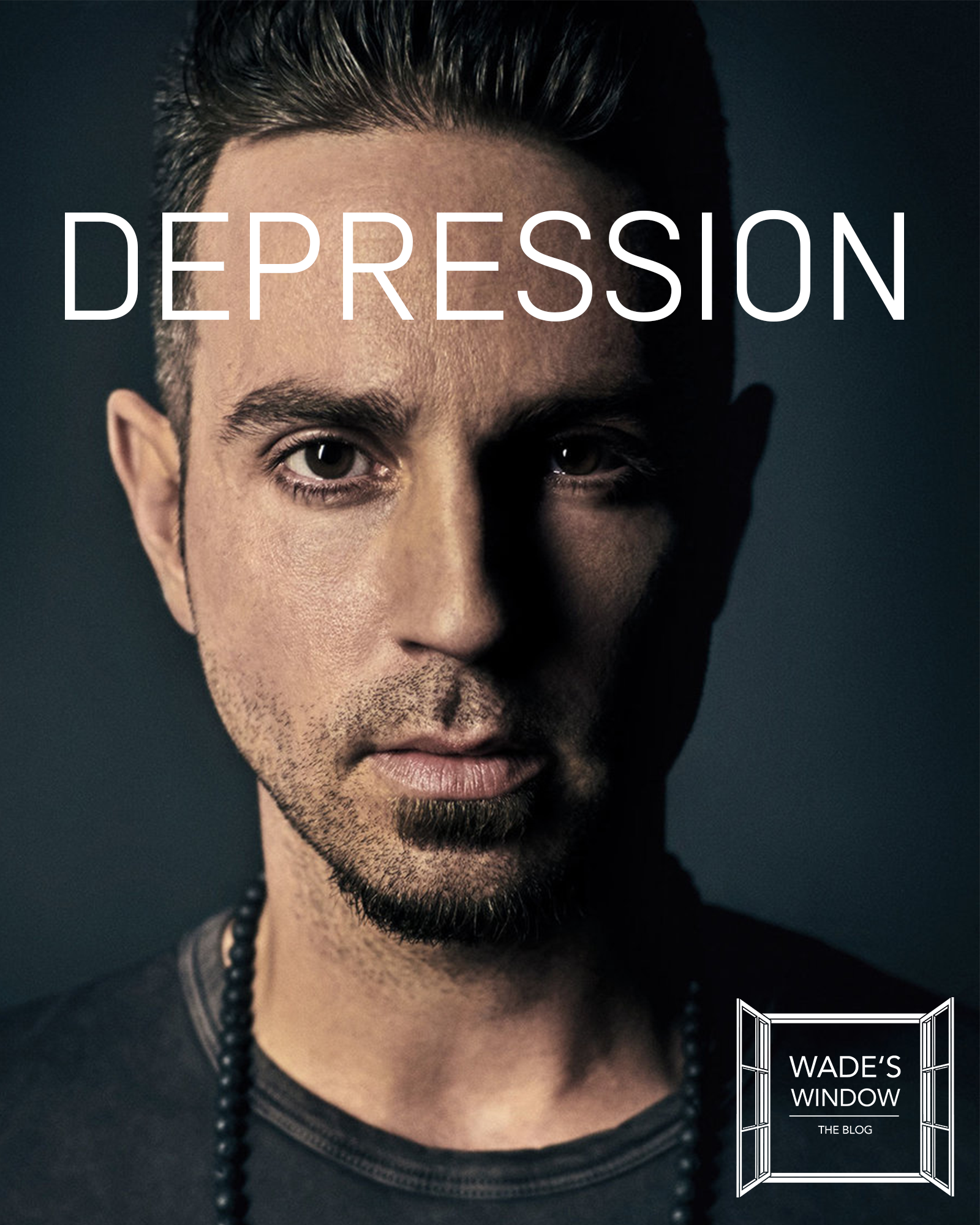





DEPRESSION
Wade shares his personal journey through depression, childhood trauma, and the practices that supported his healing.
There are, of course, many different forms and varying degrees of depression, and every individual reacts and responds to depression in their own unique way, requiring their own set of remedies. That being said, I will speak here based solely upon my own experience with depression and therefore do not claim to be an overall authority on depression’s cause, behavior or remedies, except for in my own experience. Maybe some of what I say will resonate with you and be of benefit. This is my hope.
My earliest memories of experiencing what could be called depression would have been in my early teenage years. Its more crystallized appearance seemed to coincide with my expanding external success in the entertainment business. A pattern of sorts started to develop: get the job, leap into a creative/productivity high, work like an absolute madman, battle with perfectionism, finish the job, then fall into a melancholy sadness until the next job. I didn’t have the diagnosis or word “depression” for what I was experiencing, but when I wasn’t working, I felt insignificant. I felt anxious as the clock was tick-tick-ticking and I wasn’t doing anything impressive, anything towards changing the entertainment industry and the world. I only felt that I was likable, lovable if I was working on something, and working on something big. If I was still, I wondered why anybody would love me. My mentor’s words rang in my head, “Be the best, or be nothing at all.”
The more external success, money, fame, awards, and perceived power I acquired, the pattern seemed to expand and exacerbate. Over time, the depression ceased to remain in the in-between and began to creep inside of the creative and work experiences. Now there seemed to be nowhere that was safe. Even as my creative output continued to be praised and awarded, I felt like a fraud, like I wasn’t good enough and never would or could be, ultimately creating a vicious cycle of wanting praise so badly, yet upon receiving it, cursing it, for now I only had more to live up to that I didn’t believe I could. Nothing was ever enough: not enough success, fame, money, adulation, creativity, or productivity.
Through those years, I continually tried to bury my depression and anxiety with work, success, money, stuff, women, alcohol, partying, etc., but none of it worked–at least not for long. This pattern perilously played out until it was significantly altered upon falling in love with my wife. Yet it didn’t completely cease until the birth of my son catapulted me into two nervous breakdowns over the course of a year. The second of which led to me speaking of and dealing with, for the first time in my life, the sexual abuse I experienced as a child. This turned out to be a line in the sand: life before and life after disclosing the truth that I had been holding inside of me for 22 years.
Early on in this healing process, I called my therapist and asked if he could prescribe me some medication for my depression and anxiety. I didn’t feel that I could handle it alone. He said that he could but wanted me to first understand that taking pills would not heal in any way what I was going through. He said that it may mask it for a period of time, and then when you stop taking the pills, all of your trauma and pain will be there where you left it, waiting for you. I decided not to take any medication. Again, this was a decision in relation to my own experience and needs; for others, medication may be the answer and it’s a discussion one should have with their doctor. Maybe it’s also in combination with other holistic treatments. Either way, I place absolutely no judgement upon whichever healing choices one makes.
This winding road of healing has led me to Yoga, extensive Therapy, daily Meditation, voluminous volumes of Spiritual Text, leaving the entertainment business, moving to the most isolated land mass on earth, speaking my truth to the world, changing my life and perspective on it completely and ultimately, healing my depression.
I believe that all of us go through experiences in our lives that we have to survive and in order to survive them, we manifest armor to protect ourselves. That armor is absolutely relevant for a period of time but at some point that armor’s relevancy expires and begins to hinder us from living our full life. Because we were traumatized by what we survived, most of us understandably hold onto that armor with white knuckles even though some deep aspect of ourselves recognizes that it is no longer working the way that it used to.
In my personal experience, the cause of depression can be multifaceted, yes, but I believe there tends to be an original untreated source that holds the ultimate key to the release of one’s suffering. In my case, that original source was the experience of and hiding of my child sexual abuse by a man that I loved. Once I jumped into the healing of that with everything I had, my world began to change.
I have found that the only way to the other side of the river is through it. There are no shortcuts. We have to trench through the muck, for as long as it takes, in order to reach the dry, sunny bank of our true self. The good news is, no matter how long the trenching takes, that dry, sunny bank of our true self will lie in wait. It is not going anywhere.
On a cloudy day, the sun remains beaming above the clouds.
The following is my personal recipe for the healing of my depression. Your recipe will of course be different, but maybe some of the ingredients will be the same.
Yoga.
Therapy. Particularly E.M.D.R. and Somatic Experiencing.
2x Daily Meditation. Particularly Vedic Meditation.
Free-form journal writing.
Vulnerable communication with and listening to those I love.
Time in nature.
Spiritual and self-improvement text. Click HERE for some of my favorites.
I wish you healing, health and love.
In gratitude, love + aloha, Wade.

IDENTITY
An invitation to hold our many roles more lightly and discover the possibilities beyond the identities we have learned to inhabit.
“No truth is so sublime but it may be trivial tomorrow. People wish to be settled; Only as far as they are unsettled is there any hope for them.” —Ralph Waldo Emerson.
Male, female, son, daughter, sibling, friend, boyfriend, girlfriend, child, teenager, adult, bachelor, serial monogamist, spouse, parent, professional, loser, winner, victim, victor, and on and on. Throughout the course of our lives, there are countless roles we play, and each one tends to dictate that we present a certain version of ourselves to the world: a version that we or the world deem appropriate or expected. This can leave us feeling restricted and disconnected as we try to decipher what aspects of ourselves we can or cannot reveal within the confines of each role.
Sometimes we are able to redefine a role, but then there we are again, within the boundaries of that new definition. We tend to believe that some combination of these roles does or will define who we are, yet that winning combination never ceases to transform. We tend to seek out particular societal, familial and/or political roles in order to validate our sense of worth and identity: once I am a business leader, parent, politician, activist, wealthy person, artist, teacher, etc., then I’ll be whole, we think. Yet, no matter how hard we try, the parts never seem to add up to a whole.
Have you ever become so intensely identified with a role that if that role was threatened, you felt as though you would cease to exist? Yet, if that role was extinguished, although possibly terrifying and painful for a time, maybe you eventually found that you still existed? Maybe you felt a bit—or maybe even a lot—of relief to be free of what you now recognized as the limited confines of that role? Maybe you were then able to see things that were previously obstructed from view? Maybe you were then free to imagine infinite possibilities for yourself and the world again, rather than just one or a few?
Maybe you realized that the previous role may have once been relevant in your life but had actually ceased to be so for quite some time and was in fact impeding your evolution? Maybe you no longer believed, as you once so intensely did, that that role defined who you are? Maybe you pondered whether who you are is beyond any role that you could ever play? Maybe you ruminated on how defining yourself by any particular role, no matter how grand, might diminish the unimaginable vastness of who you truly are?
To be clear, roles can have many positive aspects, such as motivating us to get out into the world and make a positive contribution. Yet what I have found to be limiting is constraining ourselves, defining ourselves solely by any one role or combination of roles, as this can close our eyes, ears and hearts to the evolutionary guidance and callings that do not emanate from or fit neatly inside of any of them. No role can ever explain, define or contain the infinite, ever-changing expression of who you are and who you can be.
What if, like the changing of the weather, we could frictionlessly float between roles, engaging completely in all that we choose, yet holding tightly onto none of them? What if we could cease to define ourselves by anything other than our infinite potential? Then, upon releasing ourselves from those chains, what if we could also offer that freedom to one another? The ripple effect could be a powerful one.
Aloha, Wade.

SPEECH
A reflection on the power of our words and the care we can bring to what we say about ourselves and others.
Our speech is a major force in the manifestation of our internal and external lives. Our emotions and thoughts crystallize into what we utter with our voices, which sends a direct message to the Universe/Nature/God as to what we believe and want to be true.
Yet regularly, either out of fear, depression, anger, jealousy, manipulation or a poor attempt at humor, we say things that we do not mean, believe to be true, or want in our lives. We often degrade ourselves and others with our words. As survivors of child abuse, we must absolutely acknowledge that we were once “victims,” yet to continue to refer to ourselves as “victims,” over and over again, perpetuates a role we no longer wish to play.
This frequently unconscious act, especially in repetition, sends clear messages to the people in our lives and ultimately, the Universe/Nature/God. Are we sending the messages that we want to send: messages that declare who we truly are, who we want to be, what we want and don’t want? Or are we sending a message that our speech is not to be trusted?
This becomes problematic when we try to use our speech for conscious manifestation of something that we do actually want in our lives. One of the most common misuses of speech that most of us are prone to, as it is quite normalized in our society, is sarcasm.
Sarcasm
(Cambridge Dictionary)
Remarks that mean the opposite of what they say, made to criticize someone or something in a way that is amusing to others but annoying to the person criticized.
(Merriam Webster Dictionary)
A sharp and often satirical or ironic utterance designed to cut or give pain.
Sarcasm is one of the lowest forms of humor. Its etymology can be traced back to the Greek verb sarkazein, which meant "to tear flesh like a dog." Have you ever known someone whose speech is so sarcastic that you never know when to take them seriously or not? This can be quite uncomfortable, frustrating and can make them, or at least their word, hard to trust.
If we extrapolate that dynamic out to one’s relationship with the Universe/Nature/God, we start to get a larger picture as to how this could play out on a macro level in our lives. Below is my personal directive, which I am not perfect at implementing in any way, but when I do, there is a lot less confusion and friction in my life and a lot more conscious creation of what my heart truly desires.
Say only what you know and wish to be true.
Love, Wade.
Photo: kgphotos_

OWNERSHIP II
Wade considers how gratitude, daily practices, and what we give can reshape our experience of what seems to be missing.
If my health is bad, I’m not meditating daily, eating well, exercising daily, getting proper rest, and am engaging in too much stress.
If I don’t have enough time, I’m not meditating daily, using my time efficiently, being present, respecting other people’s time, respecting and creating boundaries around my own time.
If I don’t have enough money, I’m not meditating daily and my relationship with and perspective on money has gone askew. I’m not being grateful for what I have, giving what I can, and doing enough of what I love.
If I hate or feel uninspired by my work or feel that I don’t have enough of it, I’m not meditating daily and not doing enough of what I love, because I love it. I’m not being grateful for what I have, not dreaming, not knowing and voicing that I, like each and every one of us, deserve the best, and deserve to do work that makes me come alive. I’m not getting my ego out of the way and letting the universe work through me. I’m not asking how I can be of service to the world. I’m not taking enough risk, tuning into true desires and leaping into the unknown.
If I feel my friends, or family, or partner aren’t appreciating me, there is a good chance I am not appreciating them. I’m not meditating daily. I’ve slipped into a narrow and rigid idea as to who they are, what they think, and what their intentions are; hence I’ve stopped paying attention and have forgotten that each of us is infinitely nuanced and ever-changing. If I feel a lack of love, I’m the one that needs to bring more love.
In summary: IF I’M NOT GETTING IT, I’M NOT GIVING IT.
Aloha, Wade

Photo: @kgphotos_

OWNERSHIP I
A personal exploration of looking inward, reclaiming agency, and meeting difficult circumstances from a place of greater inner steadiness.
“My life is so hard because…I don’t have enough money, or time, I hate my work, my friends or partner don’t appreciate me, my family is the worst, my health is bad, etc.” These are all reasons we come up with as to why we can’t be happy now. Often if it’s not one, it’s the other. The common denominator tends to be, “It’s not me that’s the problem, it’s that or them.”
Personally, whenever I find myself operating at a low emotional frequency: sad, depressed, irritated, impatient, angry, jealous, or judgmental, I can bet that I have allowed myself to slip into a victim state of consciousness. I’ve started believing that something or someone out there is in the way of and therefore has the power to control my happiness. Hence, no matter what happens circumstantially, it’s a losing battle.
When I become aware of my mistaken perspective and am able to move towards complete ownership and responsibility for my emotional and mental state and therefore my physical circumstance, I gain the capability to release all circumstances and/or people of ultimate blame for my internal state, resulting in my feeling empowered. I then re-introduce all of the beliefs and practices that keep me healthy, inspired, grateful, and energized, and even before I take any direct action toward the circumstances or people that I thought were at fault, my experience begins to change.
What I expect, I experience.
What I look for, I find.
What I pay attention to grows.
Thereupon, if I still feel it is necessary, I am able to take action accordingly towards shifting my circumstances, yet now I am able to act from a place of inner sufficiency, fulfillment, confidence, gratitude and surrender. Before long, what transpires is frictionless effort, flow, abundance, reciprocity and progressive change.
As always, it’s an inside job first: evolutionary, progressive change happens not from the outside in, but from the inside out. So whenever we are feeling low, or victimized, I find it powerful to ask, “How might I, my perspective, my approach, my resistance, actually be at the root, or at least partly responsible for this issue in my life?” Merely by asking this question, looking inward rather than projecting outward, I find that everything begins to change, for the better.
Aloha, Wade.

Photo: @kgphotos_

FROM STRESS TO SURRENDER
Through his changing relationship with dance, Wade explores releasing the struggle without abandoning the things we love.
Stress, pressure and perfectionism
When something you love begins to feel like a test you must keep passing, joy can give way to pressure. I share how my relationship with dance changed when I began loosening my grip on the outcome.
Sometimes we can let what was once a source of joy become a source of stress. In my life, I let that happen with dance. But often, the thing, circumstance or person we believe is responsible for our stress is actually not to blame. What's to blame is our own non-acceptance and resistance to the thing, circumstance or person. In my case, it wasn’t dance itself that caused me stress; it was my perspective on it, association to it, attempted control of it, narrow idea as to what role it was to play in my life, and my rigid and needy attachment to it. As it turned out, only once I let dance and my understanding of it go, once I surrendered it completely, could dance and I fall in love again.
STRESS CAN FEEL LIKE:
Speculation
Fear
Rigid ideas as to who and what we are supposed to be and do
Control
Comparison
Jealousy
Perfectionism
Resistance
Struggle
Seriousness
The need for external validation
Busyness
Running
Surrender often gets a bad rap, being associated with giving up, giving in, weakness or being taken advantage of. Yet over the years my understanding and experience of surrender has expanded immensely.
SURRENDER CAN FEEL LIKE:
Slowing down periodically
Stopping, looking and listening
Curiosity
Acceptance
Intuition over logic
Maintaining desire and preference, yet releasing rigid attachment to a particular outcome
Trust
Openness
Courage
Boldness
Leaping into the unknown
Flow
Experimentation
Play
Gratitude
All leading to the ever-growing evidence that,
Life doesn’t happen to us, but for us.
Surrender does not mean we release effort; it means we release our addiction to struggle.
Aloha, Wade.
If you’d like support
If stress and pressure are crowding out the things you love, we can make room to explore that together. My Life Mentoring work offers one-to-one support, grounded in Somatic Experiencing, for understanding patterns and finding more choice in daily life.
For a steady rhythm of ongoing support, explore the Life Mentoring Journey membership, with four one-hour online sessions each month.
Life Mentoring is coaching-based support, not psychotherapy or crisis care.
Looking for support for a teen? Explore Teen Life Mentoring

PROGRESS IS NOT LINEAR
A walk through a labyrinth reveals how growth can circle familiar ground while quietly leading us somewhere new.
There is a walking Labyrinth that I like to visit from time to time. One of the first treats is that just before you step onto the path, there lies a rock with two words carved into it, “BEGIN AGAIN.” A phrase that has become quite important to me over the years.
The pebble path ahead is narrow and complex. Along the journey, there are a few internal behaviors I often notice, such as my trying to speed through it and get to the finish line. When I become conscious of this urge, I try to slow down significantly, even to a pace that makes me a bit uncomfortable at first, which offers me the opportunity to become more acutely aware of my body and my surroundings. I then often catch myself trying to look ahead and map out the route, which is always futile. I try to bring my attention back to the present and take one slow step at a time, reminding myself that I don’t need to know the route because there is no way that I can fall off path. By about halfway through, I sometimes question if I am covering ground that I already have. Only to remember that the zigzag design of the path repeatedly brings me back to areas I have previously covered, yet not exactly the same spot, but one aisle over, about one foot to the right or left from where I once was. If I look up, I notice that even that one foot of difference in position has enabled me to see some surrounding foliage that I wasn’t able to see from the very similar but not the same spot I previously inhabited. Lessons abound.
I find that the microcosm often, if not always, reflects the macrocosm.
Sometimes in life, we think that we are finished with a certain thought process, emotion, behavior or type of relationship, only to at some point begrudgingly find ourselves back in the thick of it. We then tend to beat ourselves up, assessing that we obviously haven’t progressed at all in our lives. This reaction is completely understandable; I know it well.
Yet this actually cannot be true: there is no possible way for us, ever, to be in the exact same circumstance, thought, emotion, behavior or relationship. It may be incredibly similar; there may be a repeating theme, but you do not have the same body, mind, or wisdom that you had yesterday, and the world is a different place than it was yesterday. The only constant is change. In the midst of a repetitive thought, the mere fact of you realizing that you have had this thought before changes the nature of the thought. You now have a broader level of awareness: you know that you don’t like thinking this thought and what the probable outcome of this thought is. Even if you then still repeat the thought and again experience the probable outcome, you now experience it from a broader level of consciousness, a knowingness that you did not previously have. You have done more research and gathered more evidence as to what you would rather do next time. Although maybe not as expeditious as we would prefer, there has been progress.
As much as we would like for it to be, progress is not linear. It does not move in a straight line but rather in zigzags, circles, reverse, up, down, left and right. Yet, if you step far enough back, you will see that all of this apparently unruly movement is still, over time, moving us forward. When we re-experience similar thoughts, behaviors, emotions, and circumstances that we thought we had moved beyond, it often signals that we are not finished with them yet. There are still aspects of them for us to rumble with, to process, understand, learn and grow from.
You can’t not change. You can’t not grow. Although, the greater our level of awareness and our understanding as to the mechanics of progressive change, the more we can expedite the process.
Wishing you health, love and progress.
Love, Wade.
Revisiting familiar patterns can take time and care. If you’d like steady support along the way, explore the Life Mentoring Journey membership for ongoing, one-to-one work together.


RUNNING
Wade reflects on ending a lifetime of running from pain and learning to turn toward himself with greater honesty and compassion.
Most of us are on the run: running out of time, out of chances, away from our thoughts, emotions, and fears, running from love, pain, trauma, shame, responsibility, failure, success, lies, truth, and ultimately ourselves. The problem, as I’m sure many of you have experienced, is that whatever we run from only gets bigger, stronger and faster the longer we run from it. Wherever we try to run away to: another job, friend, lover, obsession, device, drug, alcohol, food, house, state, or country, there it is, waiting for us.
I started running when I was about seven years old. I now had a secret to keep and a lie to uphold and therefore my life could no longer be innocent, authentic and improvisational. In hindsight, if I was to sit still for too long, maybe the confusion, hurt, fear, and ultimately the truth, would catch up to me. So, this running took many forms throughout my teens and twenties. I ran scared from my relationship with my Father as his mental health declined, from intimate relationships when they became too close, from friends when they were too honest, from play because it didn’t make me win, from stillness because busyness was the only thing that made me feel safe and worthy, and from the truth because I was told it would destroy me.
Imagine the game of “Whack-A-Mole”: as soon as you hit one Mole down, another one pops up. As soon as you hit that one down, two others pop up, and as the game advances, the Moles keep popping up faster and faster until you can barely manage. This was akin to my emotional experience: fear, push it down, sadness, push it down, anxiety and anger, push them down, and faster and faster until the pace became so rapid that I eventually fell into complete nervous breakdowns. The time to run was up. My nervous system punched me in the gut and said, “Sit down, you’re not going anywhere. It is time for you to stop, look, listen and speak.”
Seven years ago today, I finally stopped running away.
As terrifying as it was, once I surrendered to being with my fear, anxiety, depression and trauma, they turned out not to be fatal. Once I gave them my full attention, they slowly started to change, soften, slow down, and shrink. They then started to teach me about the deepest parts of myself and therefore, humanity. They turned out to actually, at their core, all be motivated by love: for me, my family and friends, and for life itself. Along this journey, E.M.D.R., Somatic Experiencing and Vedic Meditation were and are essential allies.
I have learned that not all running is bad; the question is, are we running away or running towards? Instead of running from fear, we can run towards it. Instead of running from love, we can run towards it. Instead of running from life, we can run towards it, into it and with it. Everything that we run from contains infinite wisdom for us, if we could only stop, look and listen. Believe me, I still find myself running at times, but thankfully it never lasts for too long anymore. It is truly as Joseph Campbell said, “The cave you fear to enter holds the treasure you seek.”
Running away is a race we cannot win. Running towards ends the race and begins the dance.
Let’s dance.
Love, Wade.


LIGHT + SOUND
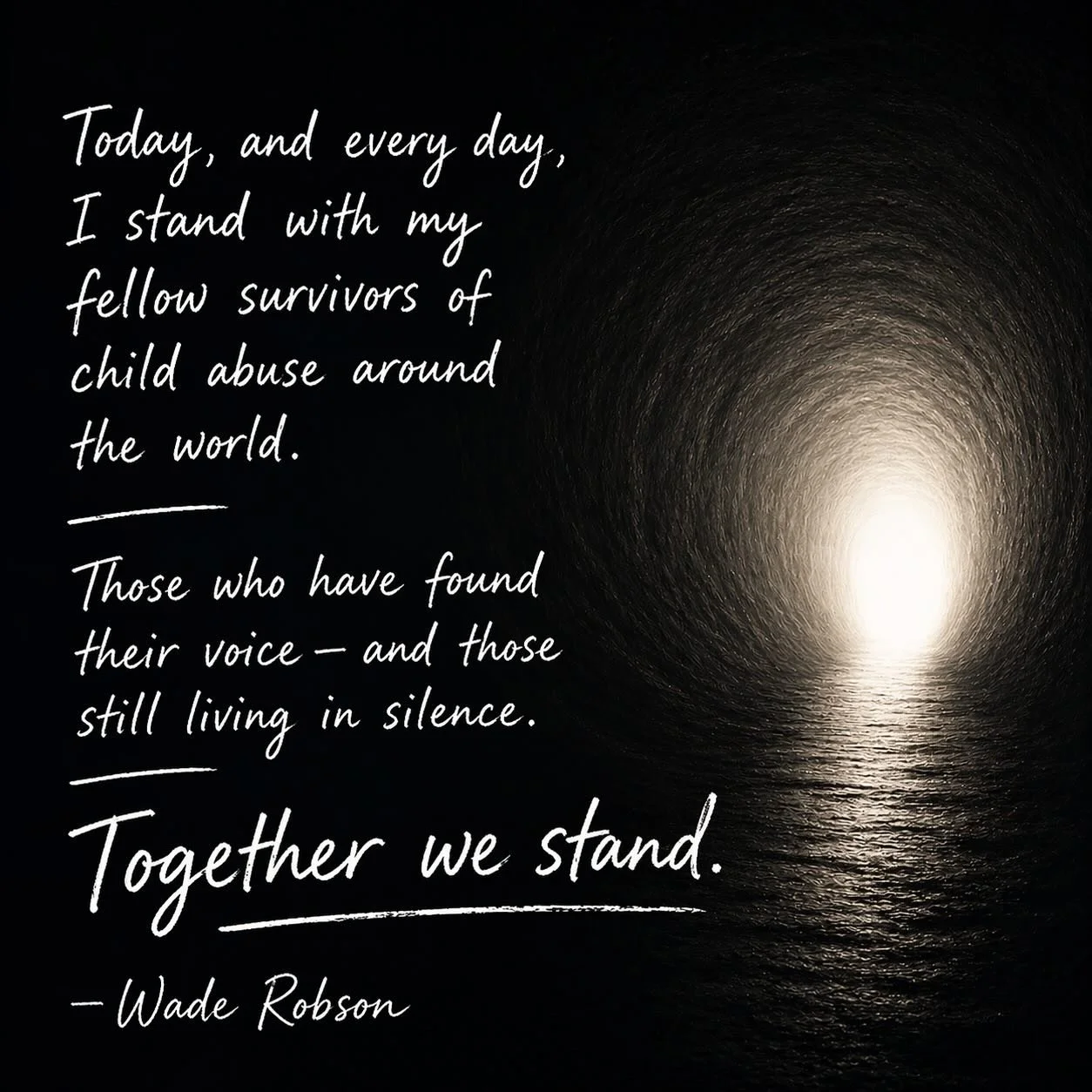
A heartfelt message to survivors and their loved ones about solidarity, speaking openly, and bringing child abuse out of silence.
To all survivors of child abuse:
I am deeply sorry for the abuse and/or neglect that you suffered as a child and for all that you have been through since, internally and externally. I honor and resonate with the confusion, heartbreak, isolation, sadness, anger, numbness, dissociation, depression, anxiety, fear, suicidal thoughts and actions, emptiness, insomnia, drug or alcohol abuse, and compulsion you may have endured in the past or may be currently enduring.
Simultaneously...
I am hopeful for your continued healing; for the possibility of a deeper capacity for compassion, empathy and love after the monumental rebuilding of one's own heart. As Rumi said, "The wound is the place where the light enters you.” If not already, I wish for you a greater experience of belonging, once having gained the courage to speak your truth and being embraced by the incredible community of survivors, worldwide. You are NOT alone. Together, we stand.
To the Parents, Family, Partners and Friends of Survivors:
I am sorry for the confusion, fear, sadness, heartbreak, depression, anger, helplessness, guilt, and isolation you may have felt or may currently feel in relation to your loved one's experience of child abuse and correlated symptoms. Simultaneously, I am excited for the possible expansion of consciousness, knowledge, wisdom, understanding, compassion, adaptability, and love that you may have already experienced or that may be on the horizon for you in response to your loved one's trauma. Although unfortunate, I understand if you were or are not able to understand and hold your loved one’s pain. Alternatively, I am infinitely grateful for the unconditional love and support you may be able to provide to your loved one. Believe me, it makes all the difference in the world.
To everyone:
Child abuse is one of the darkest aspects of humanity, which is why, generally speaking, we’d rather not face it, we’d rather not talk about it, we’d rather deny it. But this is the only way child abuse is able to be perpetrated and perpetuated: in DARKNESS and in SILENCE. As hard as it may be, we must face it, we must talk about it; to the darkness and silence, we must bring LIGHT and SOUND. We must stand together, listen to survivors, help in the healing, and above all else, protect our children. Because if not us, who? If not now, when?
We are the answer we've been looking for.
Now is the time we’ve been waiting for.
Love, Wade Robson


WHAT IF?
A series of openhearted questions invites us to reconsider worth, happiness, competition, and the possibilities of a life with less proving.
What if there is NOTHING that you HAVE to do?
What if there is nobody and no being that you ever have to prove anything to?
What if we didn’t anthropomorphize, try to place upon God, the Universe, Nature, you name it, our limited small-self human behaviors such as insecurity, judgement, jealousy, anger, resentment and punishment?
What if no one ever actually does anything from a place of absolutely understanding or knowing they are wrong?
What if, from day one of our lives, and every day since, no matter what we have done, we are enough and worthy?
What if we never placed upon anyone, no matter who they are, the impossible task and burden of making us happy?
What if the source of creativity, love, forgiveness, hope and joy is absolutely inexhaustible?
What if all of life was never, is not and will never be a competition?
What if life doesn’t happen to us, but for us?
Love, Wade.


LEAVING NEVERLAND
Wade introduces Leaving Neverland as part of his healing journey and his hope for a wider conversation about survivor support and prevention.
DISCLAIMER: The following email is about an intense adult subject matter. It absolutely concerns children but should only be taken in by a minor of a certain age under the guidance of a parent or mindful guardian. If you are under 18, please take this seriously.
Aloha Wade’s Window : The Blog subscribers.
I wanted to share an important part of my healing journey with you.
This Sunday and Monday, (March 3rd + 4th, 2019) on HBO, airs an HBO film entitled LEAVING NEVERLAND that chronicles the years of sexual abuse that James Safechuck and I suffered as children at the hands of Michael Jackson, as well as the emotional and mental effects, the years of living in silence, fear, and lies, our eventual facing of the truth, beginning to speak it to the world and the fallout from it all on us as individuals, as well as our families.
But even more important than myself, James and Michael Jackson, is that our story is, in many ways, akin to most child abuse survivors’ stories. Child sexual abuse is unfortunately not something that only happened back then, or over there, but is happening here and now, in the entertainment business, our schools, churches, neighborhoods and everywhere. It is a film that I hope will help continue and expand the conversation about child sexual abuse and be another small step towards facilitating healing for survivors, as well as shedding light and raising awareness as to hopefully move us toward greater prevention.
The film is 4 hours and airs in 2 parts. Part 1 on Sunday, Part 2 on Monday. Read more about it all, the airing schedule, and watch the trailer HERE.
Also, immediately after Part 2 airs on Monday evening, there is a one-hour special with OPRAH, myself, James, and the filmmaker Dan Reed, entitled AFTER NEVERLAND, which simultaneously airs on HBO and Oprah’s OWN Network. It continues and expands the conversation in a room filled with child abuse survivors and advocates and we also have the privilege of hearing from several of them. I think it could be quite a healing experience to watch, especially after taking in the intensity of the film.
On that note, another DISCLAIMER: Nothing is left off the table in the film. There are extremely graphic and detailed explanations of the sexual abuse James and I experienced as young children. So be aware that it may be quite difficult to take in and possibly triggering, especially for survivors. Take care of yourself accordingly.
HBO has also created an incredible RESOURCE PAGE for survivors as well as parents of survivors and people who are responsible for children. Please take a moment to check it out.
If you DO NOT have access to HBO, it will be available online simultaneously with the television broadcast.
You can sign up for a free online trial of HBO Streaming. Click HERE.
1 in 4 girls. 1 in 6 boys. These are the statistics of boys and girls that are sexually abused as children. Child sexual abuse can only happen in darkness and silence. Together, with our eyes, ears and voices, step by step, let’s change those numbers.
Love + Aloha, Wade.


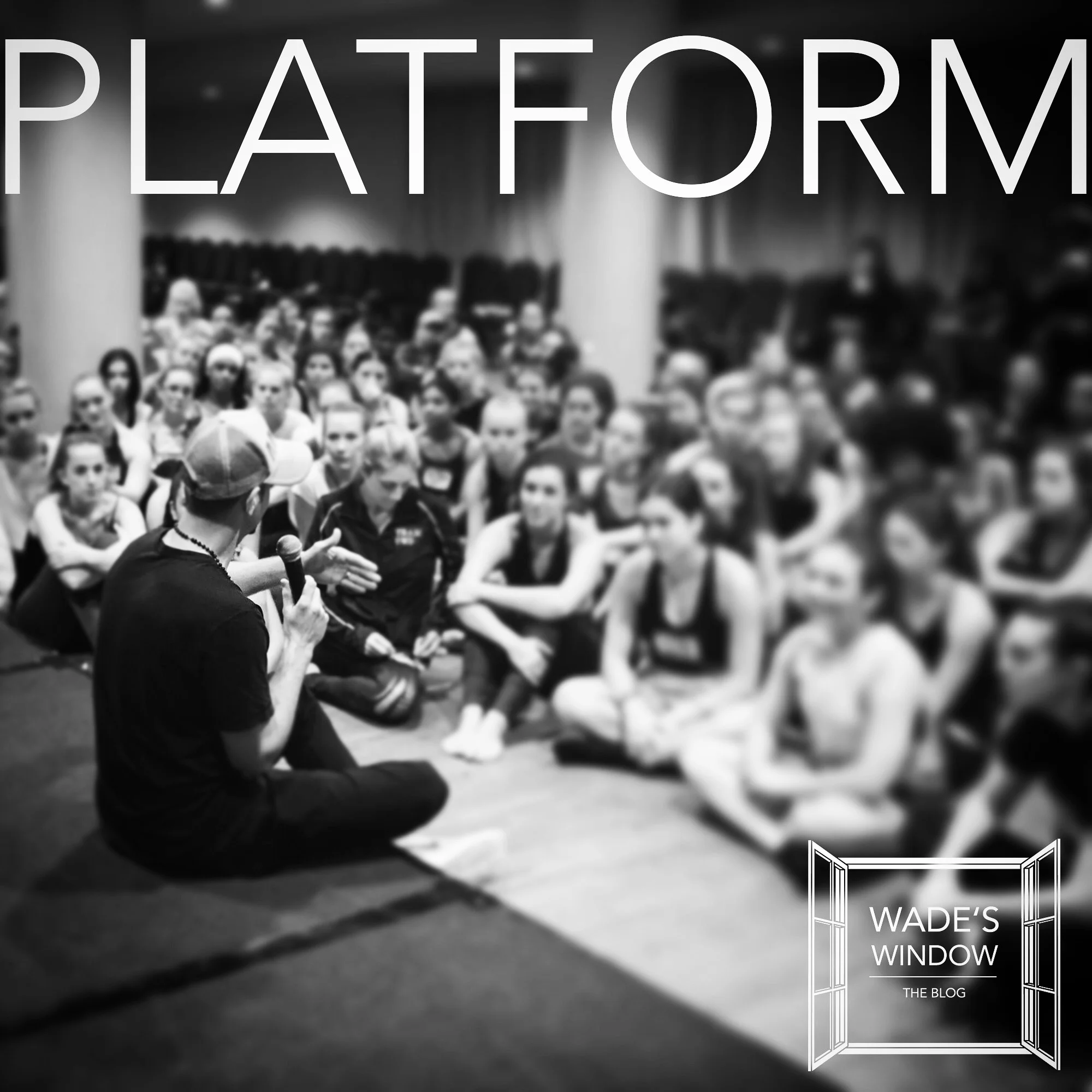
PLATFORM
An invitation to use the reach of our everyday platforms to share creativity, compassion, and ideas that serve the wider world.
We live in a day and age, unlike any other, where no matter who you are or where you live, if you have access to the internet and/or a smartphone, your work, creativity, or message can be seen and heard all over the world. The question is not “How famous can I become?” The questions are “What will I do with that power?” Am I going to contribute something negative or positive to the world?
As per usual, the device is neutral; it’s how we use it that matters. Social media, for example, can either be a dangerous addiction we use to try and find self-worth, to numb, to disseminate lies, hate, judgement, to perpetuate nonsense and spread fear. Or we can use it as a mechanism to proliferate truth, love, progressive ideas, creativity, hope, equality, awareness of social injustice, charity, community mobilization, you name it.
Why would we choose to amplify negativity in the world when each and every one of us is affected by it? As Dylan said, “The answer is blowing in the wind.” Why would we choose to amplify positivity in the world? Because each and every one of us benefits from it.
What we pay attention to grows.
So how can we use our platform, be it the world stage, our place of worship, our workplace and/or our social media feed, to elevate the collective human experience? And how can we do it not by preaching from some moral high ground, but by humbly sharing our questions, experiences, knowledge, ideas and dreams in a way that acknowledges, includes and supports all of humanity?
How do we start? One foot in front of the other.
When do we start? Now.
Love, Wade.
THE GRAM
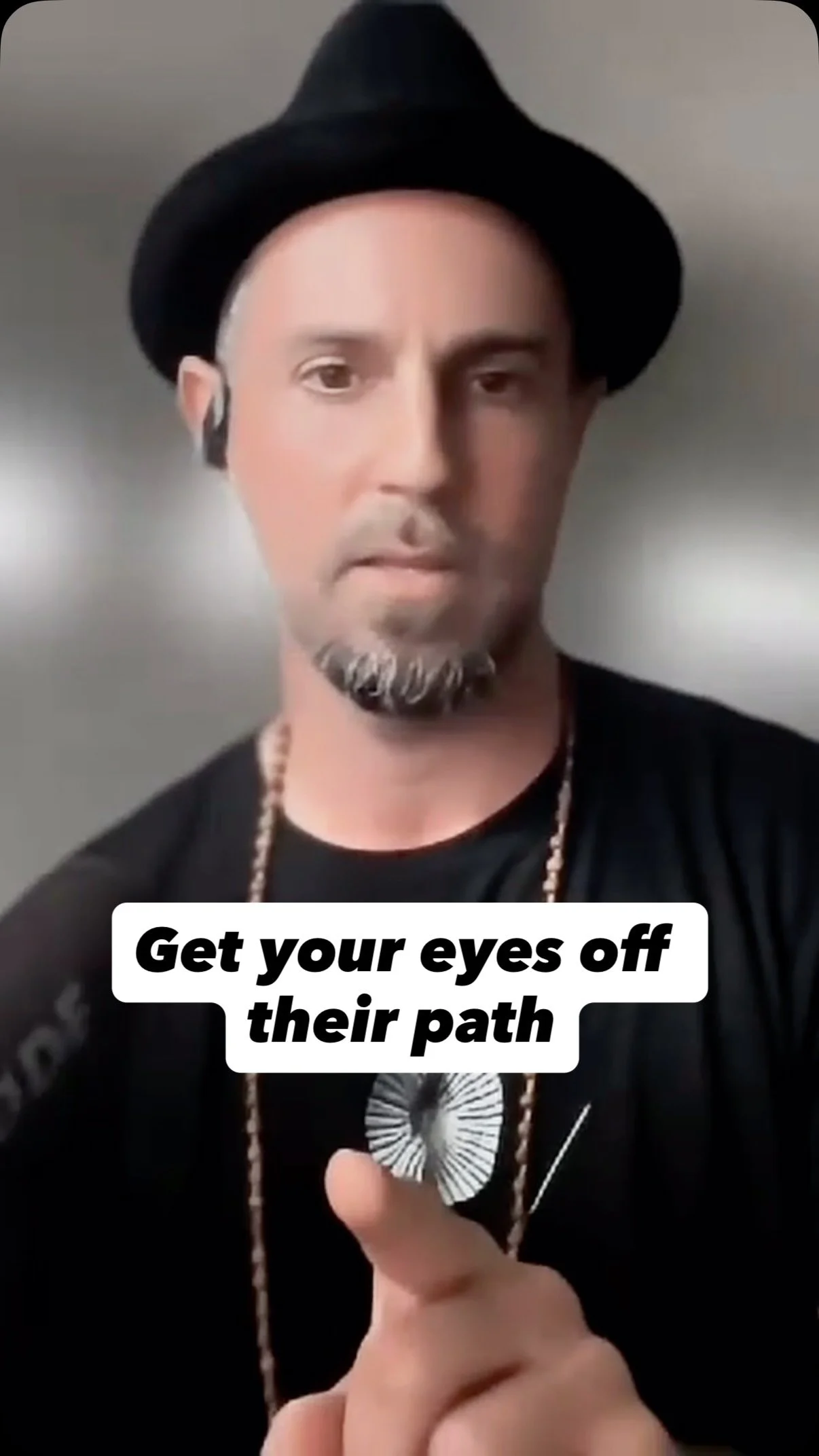

What if winning could become a path to growth, rather than a way to prove that we are worthy of love?