
A blog about my life experiences and what they have taught me
Explore by what you’re experiencing
You might arrive here feeling stressed, afraid, sad, angry or lost—or simply wanting to be more present. These reflections come from my own life. Choose what feels close to your experience, and begin there.
These are personal reflections, not treatment guides. Some essays discuss childhood abuse, grief or severe distress; notes beside those links can help you choose what to read.
Choose a topic to open its article list.
Fear & anxiety8 essays
Reflections on fear, avoiding difficult feelings and learning to reach for support.
- F.E.A.R.
My personal story of fear, anxiety and the support that helped me begin to live differently.
Includes childhood sexual abuse and legal proceedings. - RUNNING
My experience of staying busy to avoid difficult feelings, and eventually turning towards them.
Includes childhood abuse and severe emotional distress. - REMEDY
My experience of running from emotional pain and beginning to listen to it.
- VULNERABLE
Learning to let trusted people see what I was really feeling.
Includes childhood trauma and severe emotional distress. - SURRENDER
My experience of trying to control outcomes and learning to hold them more lightly.
- QUOTES THAT HAVE CARRIED ME, Part II
Words I have returned to when overwhelmed, fearful or facing the unknown.
Includes childhood sexual abuse and severe emotional distress. - QUOTES THAT HAVE CARRIED ME, Part I.
Words that accompanied me through uncertainty, change and the early years of healing.
Includes childhood sexual abuse. - BREAK TO HEAL, Part I.
The first part of my healing story: severe distress, asking for help and beginning to speak.
Includes childhood sexual abuse, severe distress and medication choices.
Stress & pressure8 essays
When achievement, perfectionism or busyness begin to crowd out joy.
- FROM STRESS TO SURRENDER
How I began rebuilding my relationship with dance after it became a source of stress.
- STRESS
Achievement pressure, children’s self-worth and preserving the joy of play.
Includes severe emotional distress. - PERFECTION
The cost of needing to be the best, and learning to make room for imperfection.
Includes childhood sexual abuse and severe emotional distress. - WINNING
Separating the desire to win from the need to prove our worth.
Includes childhood sexual abuse. - SLOW
Noticing the connection, play and everyday moments that become available when I slow down.
- RETREAT
A very short invitation to step back from busyness, then re-engage.
- MUSIC, MOVEMENT + ME
My changing relationship with music and dance, through pressure, loss and rediscovered joy.
Includes childhood sexual abuse and severe emotional distress. - HAPPINESS IS OVER THERE.
What I found after achievement did not bring the fulfilment I expected.
Sadness & finding hope7 essays
Personal stories of feeling low, meeting emptiness and beginning to see a way forward.
- UP + DOWN
A personal reflection on sadness, joy and life’s changing emotional weather.
- EMPTY
Meeting a sense of emptiness and the question, “What’s the point?”
- DEPRESSION
My personal experience of depression, the search for support and my own treatment choices.
Includes childhood sexual abuse and medication choices. Personal experience, not a treatment guide. - RUNNING
My experience of staying busy to avoid difficult feelings, and eventually turning towards them.
Includes childhood abuse and severe emotional distress. - BREAK TO HEAL, Part II.
The second part of my healing story: disclosure, support and beginning a different life.
Includes childhood sexual abuse, severe distress and treatment experiences. - BREAK TO HEAL, Part III.
The third part of my healing story: a new life in Hawaiʻi and finding my way back to dance.
Includes childhood sexual abuse. - A FEATHER...
A spiritual reflection on sadness, anxiety and emotional turbulence.
Anger & reactivity4 essays
Reflections on suppressed feelings, emotional expression and the pain that can sit beneath anger.
- ANGER
My experience of suppressing anger and learning to express it with more awareness.
Includes childhood sexual abuse and expressions of anger. - SHAME
My experience of shame, feeling like an imposter and being hard on myself.
Includes childhood sexual abuse. - BE A MAN
Questioning ideas of manhood that leave little room for feelings or vulnerability.
Includes childhood sexual abuse and homophobia. - FORGIVENESS
Discovering how much harder it was to offer compassion and forgiveness to myself.
Includes childhood sexual abuse.
Comparison6 essays
When someone else’s success starts to feel like a measure of your own worth.
- ENOUGH
The anxiety of measuring myself against others, and learning to celebrate their success.
Includes severe emotional distress. - WINNING
Separating the desire to win from the need to prove our worth.
Includes childhood sexual abuse. - PERFECTION
The cost of needing to be the best, and learning to make room for imperfection.
Includes childhood sexual abuse and severe emotional distress. - FROM STRESS TO SURRENDER
How I began rebuilding my relationship with dance after it became a source of stress.
- STUFF
Questioning how possessions shape our worth, time and attention.
- HAPPINESS IS OVER THERE.
What I found after achievement did not bring the fulfilment I expected.
Feeling not good enough13 essays
Worth, approval, perfectionism and the effort to keep proving ourselves.
- PROVE
What changes when we act from worth instead of trying to prove it?
Includes childhood trauma. - VALIDATION
The exhausting search for approval and learning to act from a sense of worth.
- MY BEST
A brief reminder that our best changes from day to day.
- PERFECTION
The cost of needing to be the best, and learning to make room for imperfection.
Includes childhood sexual abuse and severe emotional distress. - SHAME
My experience of shame, feeling like an imposter and being hard on myself.
Includes childhood sexual abuse. - WINNING
Separating the desire to win from the need to prove our worth.
Includes childhood sexual abuse. - ENOUGH
The anxiety of measuring myself against others, and learning to celebrate their success.
Includes severe emotional distress. - INSIDE OUT
Beginning with how we want to feel, rather than what we think we must achieve.
- INSIDE JOB
Looking inward for the worth and fulfilment I kept seeking outside myself.
- WHAT IF?
Questions about worth, competition and a life with less to prove.
- 2019
A new-year reflection on making inner wellbeing and connection part of our goals.
- HAPPINESS IS OVER THERE.
What I found after achievement did not bring the fulfilment I expected.
- YOU
A spiritual reflection on a sense of self beyond painful experiences and changing circumstances.
Being more present10 essays
Slowing down, listening and noticing the life happening around us.
- SLOW
Noticing the connection, play and everyday moments that become available when I slow down.
- MORE OR LESS
A short poem on busyness, wanting more and missing the life already here.
- PATIENCE
Practising patience when attention keeps rushing towards a better future.
Includes childhood abuse and neglect. - LISTEN
The difference it makes to feel heard without someone rushing to fix us.
Includes childhood sexual abuse. - RETREAT
A very short invitation to step back from busyness, then re-engage.
- GRATITUDE
The small, everyday gratitude practices I have found meaningful.
- REVELATIONS FROM BEYOND
A vivid dream and a renewed wish to appreciate the people and moments in my life.
Includes a dream about a child’s death. - STUFF
Questioning how possessions shape our worth, time and attention.
- PROGRESS IS NOT LINEAR
A labyrinth walk and a kinder perspective on returning to familiar struggles.
- SURRENDER
My experience of trying to control outcomes and learning to hold them more lightly.
Life transitions10 essays
Changing roles, endings, new beginnings and a life that no longer fits the same way.
- IDENTITY
Who are we beyond the roles we play, especially when those roles change?
- Creation - Maintenance - Destruction
A spiritual reflection on endings, new beginnings and moving with change.
Includes discussion of serious illness and death. - BREAK TO HEAL, Part II.
The second part of my healing story: disclosure, support and beginning a different life.
Includes childhood sexual abuse, severe distress and treatment experiences. - BREAK TO HEAL, Part III.
The third part of my healing story: a new life in Hawaiʻi and finding my way back to dance.
Includes childhood sexual abuse. - MUSIC, MOVEMENT + ME
My changing relationship with music and dance, through pressure, loss and rediscovered joy.
Includes childhood sexual abuse and severe emotional distress. - HAPPINESS IS OVER THERE.
What I found after achievement did not bring the fulfilment I expected.
- LET THE HARD TIMES ROLL
My reflections on painful changes and the growth I found within them.
Includes childhood sexual abuse and severe emotional distress. - THE DUST OFF
My perspective on apparent setbacks and returning to old patterns during change.
Includes childhood abuse and severe emotional distress. - SURRENDER
My experience of trying to control outcomes and learning to hold them more lightly.
- PREFERENCE vs EXPECTATION
Holding a meaningful desire more lightly as plans and circumstances change.
Feeling lost7 essays
Questions about identity, meaning, what matters and where to go next.
- IDENTITY
Who are we beyond the roles we play, especially when those roles change?
- EMPTY
Meeting a sense of emptiness and the question, “What’s the point?”
- WHY?
Revisiting the reasons behind what we do when they no longer feel meaningful.
- INSIDE OUT
Beginning with how we want to feel, rather than what we think we must achieve.
- INTUITION
Listening inward when speculation and other people’s opinions become overwhelming.
- INDECISION
A seven-day experiment in listening inward and moving beyond indecision.
- HAPPINESS IS OVER THERE.
What I found after achievement did not bring the fulfilment I expected.
Feeling stuck7 essays
Repeating patterns, uncertainty and the possibility of beginning again.
- PROGRESS IS NOT LINEAR
A labyrinth walk and a kinder perspective on returning to familiar struggles.
- THE DUST OFF
My perspective on apparent setbacks and returning to old patterns during change.
Includes childhood abuse and severe emotional distress. - RUNNING
My experience of staying busy to avoid difficult feelings, and eventually turning towards them.
Includes childhood abuse and severe emotional distress. - INDECISION
A seven-day experiment in listening inward and moving beyond indecision.
- PREFERENCE vs EXPECTATION
Holding a meaningful desire more lightly as plans and circumstances change.
- WHY?
Revisiting the reasons behind what we do when they no longer feel meaningful.
- BREAK TO HEAL, Part III.
The third part of my healing story: a new life in Hawaiʻi and finding my way back to dance.
Includes childhood sexual abuse.
Shame & self-compassion7 essays
Feeling flawed, being hard on ourselves and exploring a kinder relationship within.
- SHAME
My experience of shame, feeling like an imposter and being hard on myself.
Includes childhood sexual abuse. - FORGIVENESS
Discovering how much harder it was to offer compassion and forgiveness to myself.
Includes childhood sexual abuse. - MY BEST
A brief reminder that our best changes from day to day.
- PERFECTION
The cost of needing to be the best, and learning to make room for imperfection.
Includes childhood sexual abuse and severe emotional distress. - BE A MAN
Questioning ideas of manhood that leave little room for feelings or vulnerability.
Includes childhood sexual abuse and homophobia. - BREAK TO HEAL, Part I.
The first part of my healing story: severe distress, asking for help and beginning to speak.
Includes childhood sexual abuse, severe distress and medication choices. - BREAK TO HEAL, Part II.
The second part of my healing story: disclosure, support and beginning a different life.
Includes childhood sexual abuse, severe distress and treatment experiences.
Grief & loss2 essays
Personal reflections on bereavement and the love that remains.
- FATHER FIGURE
Remembering my father, grieving his death and carrying his lessons into my own parenting.
Includes suicide loss and childhood sexual abuse. - LESSONS OF LOVE
The relationships that have shaped my understanding of love, loss and connection.
Includes childhood sexual abuse and bereavement.
Connection & vulnerability6 essays
Being heard, letting trusted people in and making room for honest relationships.
- VULNERABLE
Learning to let trusted people see what I was really feeling.
Includes childhood trauma and severe emotional distress. - LISTEN
The difference it makes to feel heard without someone rushing to fix us.
Includes childhood sexual abuse. - BE A MAN
Questioning ideas of manhood that leave little room for feelings or vulnerability.
Includes childhood sexual abuse and homophobia. - LESSONS OF LOVE
The relationships that have shaped my understanding of love, loss and connection.
Includes childhood sexual abuse and bereavement. - LOVED & LOATHED
Finding the courage to speak honestly when approval is uncertain.
- LIGHT + SOUND
A message of solidarity for survivors of childhood abuse and the people who love them.
Includes childhood abuse and references to suicidal thoughts.
-
2023
1
- Jun 23, 2023 WINNING
-
2022
3
- Feb 9, 2022 Creation - Maintenance - Destruction
- Jan 29, 2022 POVERTY CONSCIOUSNESS
- Jan 10, 2022 ANGER
-
2021
6
- Dec 12, 2021 EMPTY
- Jul 25, 2021 PATIENCE
- May 18, 2021 INTUITION
- Mar 22, 2021 MORE OR LESS
- Feb 1, 2021 PERSPECTIVE
- Jan 14, 2021 REMEDY
-
2020
8
- Nov 13, 2020 INDECISION
- Nov 6, 2020 PREFERENCE vs EXPECTATION
- Sep 12, 2020 YOU
- Aug 11, 2020 INSIDE JOB
- Jul 13, 2020 SHAME
- Feb 28, 2020 INPUT
- Feb 11, 2020 PROVE
- Jan 15, 2020 A FEATHER...
-
2019
12
- Dec 6, 2019 DEPRESSION
- Sep 10, 2019 IDENTITY
- Sep 3, 2019 SPEECH
- Aug 19, 2019 OWNERSHIP II
- Aug 17, 2019 OWNERSHIP I
- Aug 1, 2019 FROM STRESS TO SURRENDER
- Jun 14, 2019 PROGRESS IS NOT LINEAR
- May 8, 2019 RUNNING
- Apr 2, 2019 LIGHT + SOUND
- Mar 16, 2019 WHAT IF?
- Mar 2, 2019 LEAVING NEVERLAND
- Feb 19, 2019 PLATFORM
-
2018
31
- Dec 28, 2018 2019
- Nov 25, 2018 INSIDE OUT
- Nov 5, 2018 WHY?
- Oct 13, 2018 VULNERABLE
- Sep 29, 2018 GRATITUDE
- Sep 14, 2018 SLOW
- Aug 31, 2018 SUFFERING
- Aug 16, 2018 THE DUST OFF
- Jul 15, 2018 SURRENDER
- Jul 6, 2018 BE A MAN
- Jun 30, 2018 WHY ME?
- Jun 22, 2018 STUFF
- Jun 8, 2018 VALIDATION
- May 24, 2018 LOVED & LOATHED
- May 18, 2018 UP + DOWN
- Apr 28, 2018 MY BEST
- Apr 20, 2018 MUSIC, MOVEMENT + ME
- Apr 13, 2018 ENOUGH
- Apr 6, 2018 FORGIVENESS
- Mar 30, 2018 REVELATIONS FROM BEYOND
- Mar 23, 2018 LET THE HARD TIMES ROLL
- Mar 16, 2018 TALKS THAT HAVE CARRIED ME, Part II
- Mar 10, 2018 TALKS THAT HAVE CARRIED ME, Part I
- Mar 2, 2018 LESSONS OF LOVE
- Feb 16, 2018 PERFECTION
- Feb 8, 2018 BOOKS THAT HAVE CARRIED ME, PART I
- Feb 1, 2018 TO THOSE WHO HATE ME
- Jan 26, 2018 STRESS
- Jan 19, 2018 F.E.A.R.
- Jan 11, 2018 LISTEN
- Jan 5, 2018 FATHER FIGURE
-
2017
7
- Dec 29, 2017 RETREAT
- Dec 22, 2017 HAPPINESS IS OVER THERE.
- Dec 15, 2017 QUOTES THAT HAVE CARRIED ME, Part II
- Dec 8, 2017 BREAK TO HEAL, Part III.
- Dec 1, 2017 QUOTES THAT HAVE CARRIED ME, Part I.
- Nov 24, 2017 BREAK TO HEAL, Part II.
- Nov 17, 2017 BREAK TO HEAL, Part I.








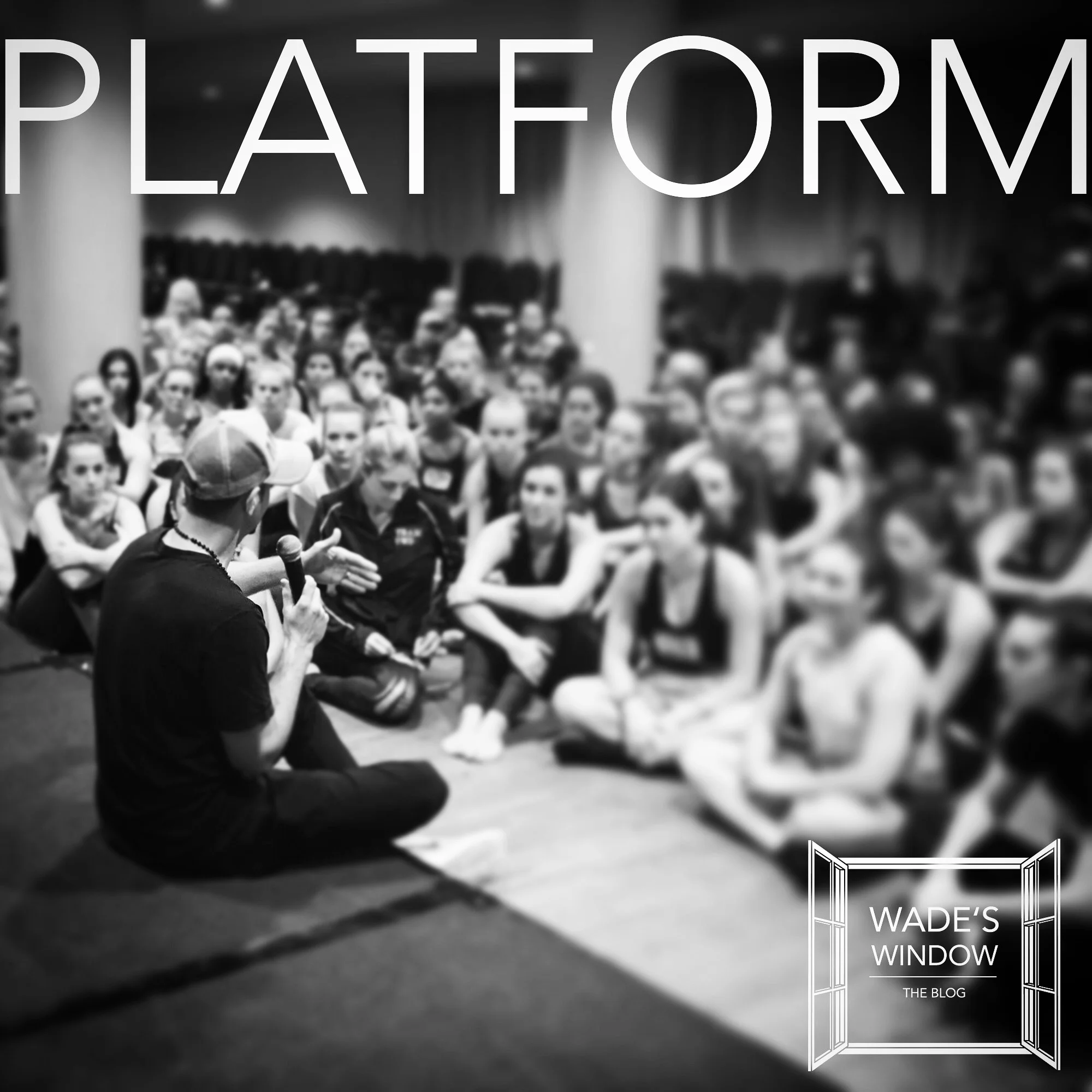

WINNING
What if winning could become a path to growth, rather than a way to prove that we are worthy of love?
What is our personal definition of winning?
Have we ever stopped to wonder if we even have one?
One of my favorite Bob Marley lines is “They say what we know is just what they teach us.” Therefore, if we do have a definition of winning, do we know its origin? Did we merely adopt it from our parents, our teachers, our peers, or society at large? Or is it one that we have been developing over time based on our own personal experience?
However conscious or unconscious our definition of winning is, the next question might be: how is it working for us? By that, I donʻt mean “Are we winning?” Rather, whether we are externally “winning” or “losing,” how is it feeling?
Do we find ourselves waiting to win in order to finally feel like we are worthy, like we are enough? Waiting for the “win” to make all of the sacrifice, blood, sweat and tears worth it? Maybe we have experienced some external winning but still find ourselves endlessly chasing the next bigger win, in search of that ever elusive sense of fulfillment and contentment?
At seven years old, I learned one of my first definitions of winning directly from the mouth of my idol, mentor and sexual abuser, Michael Jackson. “Be the best, or be nothing at all.” Over decades, this definition propelled me concurrently to a pinnacle of external success and an abyss of mental and emotional despair. Nothing was ever enough. This is a definition I have had to unlearn and redesign, for myself. Along that journey, there have been many discoveries, some of which I would love to share with you in the following paragraphs.
I have found that if external winning is our only barometer of success, whether we win or lose, itʻs going to feel empty. One of the reasons for this is our mistakenly believing that winning is the goal. This mistake is understandable due to the fact that winning is so heavily rewarded in our society—and also because winning can feel great! Yet only for a short amount of time, as that elation is often quickly followed by the pressure and fear of feeling like we now have to keep winning, and do it bigger and better every time, or “they” might stop loving us.
We may then try to keep recapturing that fleeting winning feeling, hoping that if we continue to win at higher and higher levels, maybe we can extend that feeling, and with enough accumulated winning, maybe we can eventually make that feeling permanent, finally resulting in an unbreakable sense of self-worth. Yet along this futile trajectory, we can become like the person that keeps taking the drug to ward off the depression that the drug only exacerbates. Over time, we discover that our worth is not located on the other side of our external achievements.
The desire to win and our taking action towards that end catapult us into a series of experiences where we will come into contact with our desires, aversions, dreams, hopes, fears, insecurities, skills or lack thereof, positive and negative qualities, our capability to adapt, inspire, motivate, persevere, and communicate. We donʻt learn much from winning itself, yet the process of trying to win offers us infinite learning opportunities.
Hence, winning is not the goal; it is the course. The goal is growth.
Yet if our focus remains solely on the external win or loss, every part of the journey there becomes but a means to an end, and even when we get to that end, it becomes but the means to a new end. As a consequence, we end up missing all of the opportunities for growth along the way. This is why a focus on winning or losing alone ultimately feels empty. This is why we can feel like nothing is ever enough, that we are never satisfied, because we can never get enough of that which cannot satiate. On the other hand, internal growth is quite satiating. Yes, youʻre going to want more of it, yet it is a pretty healthy thing to have a voracious appetite for.
It is not our desire to win that is the problem; it is why we want to win that can be the problem. Do we know our why? Do our kids or our students know their why? And is their why allowed and encouraged to be individuated from ours—their parents’ and society’s why? If our why is to win so we can feel worthy, what if we try our absolute best, but we never win? Does that mean we will never be worthy? What about when our prolific winning streak eventually slows or comes to an end, as all things do? Does that mean we will then cease to be worthy?
We must separate winning from worth.
Optimally, we don’t win in order to be worthy. We know that we’re worthy; then we endeavor to win in order to grow.
I used to think, win at all costs, until that cost was my health and sanity. What are we willing to sacrifice in order to win? Our health, our relationships, or our values? Because no matter how much we win, winning can’t cover those losses.
Iʻm reminded of an interview we did on the podcast James Safechuck and I share, “From Trauma to Triumph,” with the wonderful human and legendary American gymnastics coach Valerie Kondos Field. A cornerstone of her teaching is “Not all winning is success. Not all success is winning.”
In closing, how can we re-create or expand our definition of winning into one that feels inspirational, healthy and sustainable for us?
Can we separate winning from worth?
How can we be of service to something greater than a trophy?
How can we use our desire to win as a catalyst for growth as artists, technicians, professionals, teammates, and most importantly, as humans?
Winning is not the goal. Winning is the course, and whether we externally win or lose, the ultimate shiny trophy—is growth.
All of my love, Wade Robson.

Artifacts, which for me symbolized many years of my fruitless external search for worth, as an act of cleansing and surrender, found their end in a county landfill.

Creation - Maintenance - Destruction
A reflection on the cycles of creating, sustaining, and letting go—and the freedom that comes from moving with change.
CREATION - MAINTENANCE - DESTRUCTION
Before I had personal experience with the following knowledge, it was first introduced to me by my teacher Thom Knoles, who learned it from his teacher Maharishi Mahesh Yogi, who learned it from his teacher Swami Brahmananda Saraswati, and so on back thousands of years… Jai Guru Deva.
Three of the preeminent forces operating in the universe are Creation, Maintenance and Destruction.
CREATION: For the purpose of bringing forth something new and evolutionary into existence via innovation, improvisation, or fashioning previous creations into a never-before-realized combination.
MAINTENANCE: For the purpose of maintaining creations, as long as they remain relevant to evolution.
DESTRUCTION: For the purpose of destroying previous creations that are no longer relevant to evolution. The cycle can then continue and new relevant creations can occur.
The Universe does nothing but change: these three forces keep that imperative in motion.
We have seen these forces at play in our own lives millions of times: in our homes, play, work, creativity, relationships, health, possessions, thoughts, beliefs, you name it. The following are some examples:
A fruit is created, matures, and ripens: its status is then maintained for as long as it is useful (relevant); maybe until it is eaten by an animal, insect or human. Once it ceases to remain relevant for consumption, it drops from the tree and is destroyed by decomposition. It then reintegrates whence it came, back into the earth for the purpose of supporting new creation.
You start a new job; it’s exciting and challenging at first: it remains that way for a period of time, yet once you settle in, maybe it begins to feel monotonous. At that point, either you take the initiative to change your perspective, shake things up, or you maintain the status quo. If you choose to maintain the status quo, you will then either fall out of love with the job and quit, your performance will wane and you’ll be fired, your position will go away, or the company will go under, etc. Ultimately, if your maintenance of the status quo becomes overzealous, one way or another, the current irrelevant status of your job will be destroyed.
You engage in a new intimate relationship; everything is fresh and mysterious, and a massive amount of leaping into the unknown, discovery, learning and excitement is occurring. Then, naturally, over time, the newness and the mystery subside: you then either take the initiative to shift perspective, shake things up and reintroduce novelty, or you maintain the status quo. If you choose to maintain the status quo, you may become bored or resentful: then you or your partner may become unfaithful or you’ll stop spending time together, or you’ll start fighting about everything. One way or the other, the status quo of the relationship will be destroyed. This may mean that the relationship itself will be destroyed because its relevancy or usefulness is over for both of you. Or, merely the current status of the relationship will be destroyed. This may involve some pain, but ultimately will provide the opportunity for both parties to heed the call of change, shift perspectives, reengage in a new way, and recreate the way they relate: reigniting relevancy.
Your body is fit and healthy due to its youth, despite the fact that you don’t feed it well and don’t exercise. Time passes and you begin to get some small nudges that your body is not as vital as it once was, yet you pay no mind and continue to neglect to nourish your body with healthy food and exercise. Seemingly out of nowhere, a major health scare arrives that threatens your life. Option A: you heed the call and completely change your lifestyle, reinstating your body’s vitality and deepening your reverence for earthly life. Option B: you do what you need to do to “fix” your illness in the short term but then quickly return to the status quo of neglecting your health. Sooner or later, bodily deterioration and possibly bodily death arrive.
One of the major themes here is that change is always imminent, whether we like it or not. We can either:
Try our best to stop change, the imperative of the entire Universe, and eventually be dragged kicking and screaming by destruction into change, or…
Become highly aware of the nudges we are receiving as to the waning relevancy of a particular aspect of our life, then choose to embody the destruction operator, destroy what has become irrelevant and LEAP into the unknown—pure creation.
Like a canned good, every person, place, thing, experience, thought, belief or emotion has an expiration date: a window of relevancy. Yet we often tend to either not look at all or pretend as though we did not see the expiration date and then blame the expired phenomenon for following the imperative of the Universe—CHANGE. It’s important to note that expiration is not the end; it’s merely a change of status, which is ultimately a new beginning. The dictionary definition of expiration is “The ending of the fixed period for which a contract is valid:” a contract with evolutionary relevance.
Now, each one of these roles—Creation, Maintenance and Destruction—is equally important in our lives. Optimally, we want all three in play, in the above order, in a circular fashion. Yet many of us have had periods where the above order became askew, such as Maintenance in the primary position, destruction in the secondary, and creation in the tertiary: creating a life experience where fear of the unknown is the driving force, leading to a painful oscillation between monotony and destruction.
Maybe we’ve had periods or have witnessed the experiences of others in which Maintenance has been relegated to the tertiary position, placing Destruction in the secondary. Thus, this creates a volatile experience of major creative highs immediately followed by crushing destructive lows, due to there being no maintenance of what is working, what is relevant, and therefore no sustainability.
Maybe we’ve experienced or witnessed Destruction being in the primary position with constant rejection of Creation and Maintenance. This can play out as someone constantly sabotaging themselves and/or others, or involved in a life of crime, violence, drugs, sometimes leading to life in jail, bodily death inflicted by another or by oneself.
These are not punishing, but benevolent cause-and-effect forces in the Universe, tirelessly doing their work to keep the entire Universe, which of course includes YOU, moving in the direction of evolutionary change.
Let’s have reverence for, become intimate with, foster an alliance with and be available to embody these forces. Let’s heed their call: “NIVAR TATVAM” = Transcend where you are.
All of my love, Wade Robson.


POVERTY CONSCIOUSNESS
An invitation to question the feeling of never having enough and reconnect with the abundance of our own potential.
POVERTY CONSCIOUSNESS: The mistaken thought or belief that there is not enough.
Not enough time, space, creativity, work, money, love, you name it.
This would be an understandable evaluation if we humans were truly nothing but temporal flesh and blood and that flesh and blood was the sole author of our life.
Yet, maybe you have felt before, if even for a moment, that there is something bigger going on in this Universe: some sort of animating force. That YOU are something bigger than your flesh and blood. Maybe when you were in the midst of creating something or doing anything that you deeply love, and you felt like something was creating or moving THROUGH you, if even for a moment.
Who you truly are precedes, permeates and prevails your flesh and blood. Who you truly are is the source from which you came, and that source is Pure Consciousness.
Your source is also the source of EVERYTHING in existence, which of course includes everything you’ve ever wanted.
Your source is infinite and inexhaustible, and your source is not separate from you; therefore, who YOU truly are is infinite and inexhaustible.
The time has come to transcend Poverty Consciousness and elevate to the ultimate truth of ABUNDANCE CONSCIOUSNESS.
Love, Wade.


ANGER
Learning to listen to the pain beneath anger opens the possibility of expressing it with awareness, compassion, and care.
I find myself at the sink, rapidly cleaning dishes: I don’t remember deciding to clean dishes. My body is riddled with heat, electricity, and tightness. What’s going on? Oh right, I’m angry…
For as long as I can remember, I’ve run from feeling and expressing anger. I remember my Mother and Sister, from time to time, becoming outwardly, passionately angry; I hated it. At some point, I decided that I wasn’t going to do that, ever. I was always going to be the calm, level-headed one. When everyone else was freaking out, I would be the eye of the storm.
My childhood idol/abuser would also get angry every now and then, but it was a very different kind of expressed anger; it was quiet, internal, cold, calculated, vengeful, and saturated in superiority. Beginning as a child, I think I tried to adopt his brand of anger. As with everything he did, I thought it was cool, yet I was terrified to ever be on the receiving end of it. In hindsight, this fear probably added to my already powerful compulsion to lie for and defend him for so many years.
As a teenager and young adult, I took pride in people commenting on how calm I was, how I never seemed to get angry or stressed. My anger-free strategy was to avoid conflict at all costs, either by people-pleasing, walking away, being the boss and having someone else deal with it, or just cutting someone out of my life cold turkey: a tactic I also learned from my abuser. Along with anger, I buried most of my emotions, or, as I thought, “channeled” into my work. For a while, it seemed my plan was working.
One night, early on in my relationship with my now wife, Amanda, she became very upset because she thought that I was attracted to another woman at a restaurant event we were attending. I calmly tried to explain to her that she was absolutely mistaken. She wasn’t buying it. The truth was, she was mistaken, as I was utterly in love with and only had eyes for her. As she continued to refute my “calm” defense, finally something snapped inside of me: I threw down my keys in blistering anger and screamed at her injustice. Amanda’s immediate response was to scream back, “Yeah! Come on! Now we’re getting somewhere!” Whoa, ha, not the reaction I expected. She was excited to finally see me express some anger. This was only a momentary release, though; I rapidly bottled all of that back up.
Several years later, our son was born; I had two nervous breakdowns over the course of a year; I disclosed the sexual abuse I experienced as a child and began my healing journey. As it turned out, keeping my anger submerged was no longer going to be possible. As 20-plus years of suppressed emotions began to be expelled from my mind and body, anger started to rise up with a vengeance and speed beyond my capability to suppress it. For the first time in my life, I began to argue and raise my voice, one time even punching a hole in our wall. In therapy, meditation and journaling, I began to face and start processing my anger towards my Abuser, my Mother, as well as the many people around my abuser who turned a blind eye to his activities. This particular phase of release was both terrifying and liberating.
I then began to become aware that often when I would become angry, what was actually happening was that my ego was trying to protect me from what was really going on underneath: namely, embarrassment, guilt or shame. Another portal to another layer of possible healing had been revealed.
My Son is one of my greatest sources of joy, inspiration, meaning and purpose in life, as well as unintentionally triggering my anger like no other. I’d love to plead my case here as to why I’m justified in my reactions to some of his behaviors, but the hard truth is sometimes he merely doesn’t want to do what I want him to do, or he ignores me, or he makes us late, or he questions my authority, or will simply not be controlled. Often when I’m outside of the triggering moment, I’m able to appreciate his individuality, but frequently, in the midst of it, it all makes me quite angry. Over time, I’ve learned that the source of my anger is not actually my Son; it’s old pain deep inside of me that is being activated; yet in the moment, that’s often hard to remember. One of my early insights to this was from an incredible book, which I recommend for any parent, entitled “Parenting from the inside out.”
When this anger begins to swell up in me, I occasionally still try to suppress it: remaining calm on the outside and pleasantly asking over and over again for my instructions to be followed. Once upon a time, I could continue to suppress that anger indefinitely, but now I can only hold it down for so long. At some point, the top blows off, the valve releases and from the outside perspective, I go from seemingly complete calm to anger in a split second. My posture becomes erect, my voice booming, my eyes laser-focused, and my words cutting.
Thankfully, the majority of my anger goes unexpressed to my Son: rather, I try to remove myself from the interaction, get some space and privately lean into the anger. I try to become intimate with it psychologically, but most importantly, physiologically: to observe it, track it and describe it to myself. I find that often by this act alone, the anger begins to dissipate. Peter Levine’s Somatic Experiencing work has been instrumental for me in this process. Yet sometimes the intensity of the anger also requires that I expel it some other way, such as exercise, journaling, venting to a friend, meditation, or as I began this essay, at the sink, rapidly cleaning dishes.
Finding myself at the sink, without remembering having consciously chosen it, has, I believe, something to do with my ego, when stressed or angry due to a futile attempt at control, looking for something that “we” CAN control. “We can take these dirty dishes, and we can make them clean. It’s simple, they don’t talk back, manipulate or abuse: they do what we want them to,” says the ego. This human thing can be so messy: I guess sometimes I just want to clean it up, put it away and close the cabinet doors.
As children, we don’t have a lot of control of our external lives, and in my case, as in many others, the child abuse and forced silence I experienced were a heightened experience of loss of control and disempowerment. Among other tactics, my ego sometimes tries to use anger to regain a false sense of control and power. This is, of course, not real power, not sustainable and not a tactic I endorse, as in these instances, the ego and anger are in control.
The good news is, as I keep leaning in, observing, questioning, redirecting and, most impactfully, meditating, anger continues to lose its grip on my mind and body. I no longer believe anger is wrong or a mistake; it is a part of the human experience and therefore has its relevance. I don’t want to suppress it anymore, but I also don’t want to project it out onto anybody else. Therefore, my constant practice remains leaning into it and engaging in healthy, non-violent ways to exercise it and channel it.
My experience with anger so far has been yet another lesson in regard to our infinite capability as humans to consciously or unconsciously create our internal experience, and ultimately our external experience. Therefore, since our experience of the external world is dependent upon our perspective on it, from the inside is how we change it.
Love, Wade.


EMPTY
What might become possible when we stop filling every silence and allow ourselves to meet the openness of being empty?
Several weeks ago, I was sick. Physically, it was intense, but what’s actually been even more challenging has been the mental and emotional experience during and after the physical symptoms. The best way that I can describe it is a feeling of emptiness. I’ve felt insatiable, like a hungry ghost. A feeling of “What’s really the point of anything?”
My initial reaction was to try and run away from these feelings, distract myself until they hopefully went away. As per usual, that didn’t work. Then I started to try and lean into the emptiness, be with it, not try to change it or fix it, but merely allow it and observe it. Looking down the dark well of emptiness, shouting my curiosities into it, the following is some of what has been reflected back to me, so far…
The usefulness of the vessel depends upon its emptiness.
The melody is pretty because of the notes that are not played.
The beautiful painting springs forth from the blank canvas.
It’s an adventure precisely because we don’t know what’s going to happen.
In order to be found, I must be lost.
In order to wake up, I must be asleep.
In order to know, I must not know.
In order to desire, there must be a void.
From silence, comes sound.
From stillness, comes movement.
From space, comes form.
From darkness, comes light.
From the end, comes the beginning.
From nothing, I can be anything.
From nowhere, I can go anywhere.
When I think I know, I stop the flow of knowing.
When I’m empty, I can be filled.
From meaninglessness, comes meaning.
From purposelessness, comes purpose.
From emptiness, comes fulfillment.
From nothing, comes everything.
Love, Wade.


PATIENCE
Patience becomes a daily practice of trust, surrender, and finding our way back to the life unfolding right now.
Patience is hard.
We want healing, results, success, change, peace, happiness, retribution and we want them NOW!
We have a desire, need, expectation, and if things don’t seem to be going our way, we think something has gone wrong: a glitch in the Matrix has occurred, so to speak.
Impatience means we have deemed NOW not good enough, so we’re focused on the so-called “better” future to come. The problem is, if we’re always focused on the future, we’ll never experience the now. Therefore, even if the so-called “better” future were to arrive, we’ll miss it, because the only time the future can actually occur is NOW.
Impatience means we don’t believe that in the macro, everything is in order and working itself out at its own pace. We think the Universe needs our individual flesh and bone assistance in order to keep things on track.
What’s the source of our impatience? A lack of trust in life.
When did we stop trusting life? Maybe when we were abused or neglected as children. Maybe once the symptoms of that abuse or neglect became evident. Maybe when our parents, teachers, peers, or society at large taught us to be afraid of life. This is, of course, quite an understandable reaction. Yet, how is not trusting life working for us?
Of course, it’s easier to be patient when things are “going our way.” Yet we’re not actually being patient until it’s become increasingly difficult to remain patient. We’re not trusting in life until things are seemingly “not going our way.”
Patience is an active daily PRACTICE: rooted in trust and surrender.
How do we trust again?
Meditate, daily.
Then, look back on your life and notice how, when the time was right, although sometimes quite painful, everything has ultimately always worked itself out the way it needed to be. The proof of that lies in the fact that you are here, right now, reading this.
How do we surrender?
Rather than deny, own.
Rather than move against, move with.
Rather than fight, dance.
Love, Wade.


INTUITION
A reflection on returning to the wisdom of the body and finding the courage to follow what feels right.
in·tu·i·tion
/ˌint(y)o͞oˈiSH(ə)n/
noun
the ability to understand something immediately, without the need for conscious reasoning.
When we were infants, toddlers, children, maybe even teenagers, we LIVED in our BODIES. We said or did something because it FELT right. If we didn’t say or do something, it was because it didn’t FEEL right. Then, slowly but surely, most of us were educated out of our bodies and into our MINDS. We were taught that our mind is the ultimate captain of the ship, the navigator; that intellect and logic are king. We were taught, implicitly or explicitly, that intuition, that feeling in the heart and gut, is akin to superstition, and namely, is NOT to be trusted. We were taught that what we can trust are the opinions of elders and experts, data, evidence, facts, reason, a good old pros and cons list and what has happened to us in the past.
Now there can of course be merit found, at times, in some of the aforementioned resources. But what a lot of it tends to lead to, for one’s own experience, is a torturous amount of time and energy wasted in speculation. Speculation leads to confusion. Confusion leads to stagnation. Stagnation calls forth destruction. Why? The Universe operates on pure motion and change: a.k.a. evolution. So when stagnation occurs, corrective action is automatically taken. This is not a punishment of any kind; it is simply cause and effect.
You have most likely had the following experiences:
A - A particular choice makes all the logical sense in the world, but it just doesn’t FEEL right. You discredit the feeling and take action on the logical choice. It doesn’t turn out well.
B - A particular choice doesn’t make logical sense, but something about it just FEELS right. You decide to take action based on the feeling. It turns out surprisingly well.
C - A particular choice doesn’t make logical sense, but something about it just FEELS right. You confer with your intellect and speculate about it for days, weeks, months, or even years. Finally, you decide to take action on the original feeling. It doesn’t turn out well. You deduce that you cannot trust your intuition.
Why did version C turn out this way?
Our intuition, our desires, have a window of relevance. The feeling contains a directive, which is “NOW.” In the case of version C, you stagnated in speculation, and by the time you decided to take action, the Universe had changed and the window of relevance for that particular action, for you, had closed.
So what do we do?
Meditate, daily. Meditation is a daily practice that affords us the opportunity to move beyond the intellect, unwind stresses from the physiology and therefore strengthen our connection to our intuition, which is our direct line to source.
Tune in with what does and does not FEEL right.
Surrender speculation. Do not wait. Take any action you can, now.
Leap into the unknown.
The direct result is complete support from the Universe.
And if you do not like where you land, leap again.

MORE OR LESS
A quiet poem about the ways our pursuit of more can leave us with less of the life we long to feel.
The more I want, the less I have.
The more I long for, the less I’m here for.
The more I own, the more I’m owned.
The more I think, the less I know.
The more I correct, the less I enjoy.
The more I fight, the less I win.
The more I do, the less I am.
The faster I go, the less I have time.
The longer the list, the shorter the bliss.
The more I’m busy, the less I produce.
The more I do, the more I miss.
The more I run, the more I stand still.
Wade Robson


PERSPECTIVE
Small shifts in perspective invite us to meet familiar struggles with greater curiosity, gratitude, and possibility.
One of the great determiners of our experience of reality is our perspective.
Change our perspective, change our experience of reality.
I only have enough money for the month!
Vs
I am grateful to have enough money for the month!
I’m going through so much.
Vs
I’m growing through so much.
The Universe is against me.
Vs
The Universe is pushing me to grow.
Nobody understands me.
Vs
I haven’t yet found the most effective ways to express myself.
It’s not fair that I got hurt and can’t do what I love.
Vs
The Universe has created an opportunity for me to rest and reflect.
I can’t be happy because of them.
Vs
Nobody is responsible for my happiness but I.
I don’t have enough time.
Vs
I could learn to spend my time more intentionally.
My heart is broken.
Vs
My heart is wounded and its healing will make me stronger.
With my luck, it won’t work out.
Vs
Whatever happens will be evolutionary.
Why me? (Said with angst and a sense of injustice)
Vs
Why me? (Said with curiosity and reverence)
Life happens TO me.
Vs
Life happens FOR me.


REMEDY
Through his own healing journey, Wade explores what changes when we gently listen to emotional pain instead of running from it.
Emotional pain arrives and we often immediately start looking elsewhere for the remedy: Netflix, food, social media, other people, cleaning, alcohol, drugs, romance, work, money, stuff, you name it. We’re looking for a soothing salve that will quickly make the pain go away. Even though, if we are being honest, we have already gathered mountains of evidence for ourselves over the years that none of these external pain relievers work for very long. Still, this behavior remains quite enticing and addictive due to the fact that it seems to work so quickly and easily. Even if the pain relief is only for a short amount of time, it nevertheless feels like the better option than having to merely endure the pain.
So what’s the remedy for the unfortunately short duration of external pain relief? Our frequent answer is more and stronger doses of our quick fix of choice. So, we try this approach, and it maybe works for a while, yet at some point, its effectiveness starts to wane. At this point, we either find a new quick fix method altogether or we double down, up our dosage so high that we may even begin to cease feeling anything at all. However, our pain may be so terrifying, so great, that the lack of feeling anything at all still feels like the better option. Yet eventually, we may find ourselves so numb, isolated, unsure of the point anymore and wishing we could just feel something, anything. Sometimes we’ll even enact extreme or violent measures against others or against ourselves, in a desperate attempt to satiate that deep desire to feel something.
If we put our hand in the fire, we will undoubtedly feel the intense pain of being burned. Immediately, we will viscerally understand that unless we want to get burned, we should not put our hand in the fire. Conversely, if we had put our hand in the fire and felt no pain, we may have inadvertently allowed our hand to be utterly destroyed. This analogy points to a greater truth, that our health and well-being are not hindered by pain but are rather dependent upon our feeling of pain. Often, in order to know the thing we want to avoid feeling, we must first feel that very thing. Furthermore, it’s the acknowledging, accepting, embracing and feeling of the experience that we don’t want that can be the necessary component of moving towards the experience that we do want.
I ran from and tried to bury my pain for a long time: so long that I eventually started to feel completely emotionally numb. Then, once my nervous system reached emotional pain storage capacity, I broke open. The last 9 or so years have been a masterclass in learning to lean into the pain. The more we run, the bigger, faster and scarier the pain becomes. Yet the revelation is that although terrifying at times, when we can learn to slowly sit with, look at, listen to, describe and feel the pain, albeit painful, it’s often nowhere near as scary, excruciating and deadly as we imagined. The therapeutic technique SOMATIC EXPERIENCING can be quite helpful in this journey.
I find it akin to a child who is throwing a tantrum; once we can stop, tune in, acknowledge, and resonate with the child, she may start to feel more safe, less needy and eventually calm down. Our pain is like that child that needs to be seen and heard. Eventually, the time comes when we must heed that call.
The good news is: pain, anxiety, and fear—the so-called “problem”—are not actually the “problem” at all, but rather an essential ingredient of the solution. Ironically enough, nothing heals like pain.
Love, Wade.


INDECISION
A seven-day experiment in listening inward, choosing with greater clarity, and taking the next step beyond endless speculation.
Indecision and its determiner, speculation, are major sources of human suffering: the coulda, woulda, shoulda’s, or the never-ending pros and cons list. Indecision causes stagnation in our life and stagnation brings about depression and destruction. Like the rest of the Universe, we need movement, flow and reciprocation. We do not want to WAIT in life, for anything, ever. We want to tune into our intuition and take action immediately. Now, we must also expand our definition of action: for example, sometimes the intuitive hit we’ll receive will be to rest for a moment and gather information, and if so, that is the immediate action we take.
THE DECISIVENESS DIRECTIVE | a 7-day experiment
You can start with smaller, more inconsequential choices:
Should I run or do Yoga?
Should I cook or order in?
Should I call or text?
Should I learn piano or photography?
Should I meditate or return emails?
Take at least 30 seconds to a minute for the following:
Get still and quiet, eyes closed, hand on your heart, and take some deep breaths. Then ask yourself: which choice contains the greater charm? Which choice pulls me towards it, just that little bit more?
The charming choice may or may not be the one that makes the most logical sense. For example, I’m sure you’ve had the following experiences: “It doesn’t make sense but for some reason, it just feels right,” or, “It makes all the sense in the world, but something about it doesn’t feel right.” That FEELING is what you are looking for. It will often show up in the chest or the gut, but it could also show up somewhere else in the body.
Once detected, drop the other choice like a hot potato, forget it and move immediately in the direction of the charm-containing choice. Ask yourself, “What action can I take, TODAY, however great or small, to move me in the direction of that greater charm?”
Now, let’s say you can’t yet detect which choice contains greater charm: the mind is still super loud, the pros and cons seem to be even, you’re afraid of both sets of cons, and you just can’t seem to make a choice: flip a coin or eeny, meeny, miny, moe it! Whichever one is chosen, drop the other choice like a hot potato and take immediate action towards the chosen choice. Do not speculate.
You may ask, “What if I make the wrong choice?” The great part is, there is no time machine for you to go back and experience how life would have been if you had made the other choice: you’ll never know! So leap into the choice that feels right in the moment and if you don’t like how it pans out, then make another choice. The alternative is to stagnate, speculate and suffer.
This is an experiment in order to gather your own evidence as to the outcomes and experience of your decisiveness. Then based on your evidence, you can then decide to start applying this method towards greater, more “consequential” choices:
Should I speak up or hold my tongue?
Should I move to a different state or stay here?
Should I quit or stay in my job?
Should I take this new opportunity or not?
Should I end or stay in this relationship?
Detect charm—Take Action.
At the end of life, we will not regret the things we tried that maybe didn’t work out.
Yet we may very well regret the things we never tried.
Waiting is over. It is time for charm-directed action.

PREFERENCE vs EXPECTATION
What changes when we follow our desires with an open hand, allowing life to unfold beyond the outcomes we imagined?
“In order to be disappointed, we must have an appointment.”
To have preferences in life is essential. Preferences motivate us to get out into the world and have evolutionary experiences. Expectations, on the other hand, are a whole different ball game. Neediness transforms a preference into an expectation. A preference says, “I would love for this circumstance to go a particular way, but if it doesn’t, I will be okay.” An expectation says, “I need for this circumstance to go a particular way, and if it doesn’t, I will not be okay.”
An expectation is predicated upon the belief that life happens TO us. A preference is predicated upon the belief that life happens FOR us. What do I mean by that? If we believe that the Universe is ultimately always moving in the direction of evolution: we receive a preference, we take action towards it, and if it “doesn’t work out,” believing that life happens FOR us, we become curious and maybe even excited as to what is going to happen next. We then adapt, flow with and evolve.
If we believe that life is ultimately chaos that we must try to manipulate in our favor via our flesh and blood: we create a needy expectation for a particular outcome, we move towards it, and if it “doesn’t work out,” we feel that we have failed, or others have failed us, or that we will be ruined, and that the universe is against us. We feel victimized and defeated; we tighten up, stagnate and deteriorate.
In a broader sense, it is true that what we expect, we experience. If we expect things to go “wrong,” no matter what actually happens, our overall experience will be one of things going “wrong,” i.e., waiting for the other shoe to drop. Yet, if we expect things to go “right,” no matter what actually happens, our overall experience will be one of things going “right,” i.e., “This is not what I wanted, but I trust that this experience is leading me towards what is actually more evolutionary.” One of the problems is that our expectations tend to be narrow, overly detailed and rigid, leaving no room for new knowledge to be received amidst new experiences. Rigidity blocks the natural evolution of our preferences.
My personal experience is as follows: the Universe speaks to us, via our preferences and aversions, in a language that we can understand, at the time. These preferences and aversions move us into action and therefore experiences, which expand our awareness, our knowledge, and ultimately our capability to process new language from the Universe, in the form of evolved preferences and aversions, which lead to new experiences: ad infinitum.
Most importantly, we want to first understand the core of our preferences by breaking them down to the key message. For example: take a detailed preference like, “I want to be a professional dancer in Hollywood, doing these kinds of jobs, dancing with these kinds of people, making this kind of money.” First, strip it down to something like, “I absolutely love to dance and I want to be able to spend my life doing it.” This is the motivational core.
Then, it’s absolutely okay to add those detailed preferences back on top and move towards them, but if we are rigidly attached to the detailed preferences, if they become needy expectations, there is a very good chance that once we start having dance experiences, and if things don’t seem to be working out in Hollywood, or with those kinds of jobs, or those kinds of people, we are going to feel defeated, stuck and victimized: as if the entire preference and course of action was a mistake.
Whereas, with a less rigid set of expectations, if the details of your preferences don’t seem to be working out, you can come back to your core preference, “I absolutely love to dance and I want to spend my life doing it,” and open yourself up to continued Universal guidance. Maybe there is some other place or some other group of people or some other way for you to spend your life dancing? A way you never could have realized until you first followed your original preference and had a set of experiences which expanded your awareness and capability to process and apply a more evolved version, for you, of your original preference. Then we can take an approach like, “Universe, I surrender the details. I am available. Show me how, when, where and the next action to take.”
Maybe the next most evolutionary experience for you is to dance in NYC off-Broadway, or choreograph music videos in India, or dance in Brunei—who knows? Yet most likely, you wouldn’t be able to receive, process and take action on those expanded preferences until you first took action towards the original Hollywood dance preference.
Once we can let our dreams unfold via their natural drip method: preference | action | experience - upgraded preference | action | experience, we’ll create a lot less friction in our life, and we’ll stop pressing the snooze button on the wake-up calls from the Universe. We’ll finally stop feeling exhausted by pushing and actually feel energized by being pulled.
All of my love, Wade.

YOU
An invitation to look beyond changing thoughts, feelings, and circumstances toward a sense of self that suffering cannot define.
No matter what has happened to you, YOU are not broken. YOU cannot be broken.
How is that possible? Let’s start by asking: who are YOU?
Are you your body, thoughts, emotions and circumstances, when all of them have done nothing but change since the day you were born? Your body, thoughts, emotions, and circumstances cannot even begin to tell the complete story of who you are.
Who are you then? Well, who is the you that has been aware of your body, thoughts, emotions and circumstances all along? If you can be aware of having a thought, who is the you that is aware of having a thought? That begins to get us much closer to comprehending the complete story of who you are.
In order for there to be form, there must first be space. In order for there to be sound, there must first be silence. In that same way, in order for there to be physical matter, there must first be consciousness. Like energy, consciousness can neither be created nor destroyed; consciousness can only be transferred or changed from one form to another. Consciousness is the infinite, inexhaustible source of everything, including you.
This brings me back to my opening statement: No matter what has happened to you, YOU are not broken. YOU cannot be broken. You, as a human, CAN be covered in muck or shrouded by clouds, so to speak, but who you truly are still remains untarnished underneath. The work to be done is not to repair you, but to remove the muck and clouds that are covering you up, in order for the glory of who you are to shine through again.
How do you remove the muck and clouds? Are you meditating daily? Are you going to therapy? Are you journaling? Are you reading inspirational personal growth material? Are you eating healthy? Are you exercising? Are you spending time in nature? Are you exploring forgiveness? Are you practicing love?
If you are able and your answer is no to any of the above questions, you may not be doing the work required to remove the muck and clouds. And if you’re not doing the work, your experience may seem to be one of being broken. That is not an experience of your truth and you deserve to experience your truth.
All of my love, Wade.


INSIDE JOB
A reflection on turning inward for the love, worth, and fulfillment we so often search for in the world.
Anything you think you need "out there," the actual source of it is inside of you: love, worth, respect, validation, safety, happiness, you name it.
How do I truly know this for myself?
Try over and over again to sustainably find one of the above via external acquisition such as money, success, sex, romance, food, diets, workouts, houses, cars, stuff, medication, lawsuits, arguments, likes and follows. Evidence gathered? Next:
How do I find it inside of me?
Meditate, daily.
Engage in insight-oriented therapy, if you have access to it, and/or find a mentor/coach/teacher.
Listen to and read tons of mental, emotional and spiritual growth material.
Journal regularly.
Cleanse and heal the body temple.
And not merely one of the above—all of the above.
Let’s say I find what I need inside of me, what then?
Now that you are no longer fruitlessly looking for fulfillment from the world, you can bring your fulfillment to the world, via your relationships, work, and art.
How do I make other people understand?
You don’t. You do you. They’ll notice. They’ll inquire. You’ll respond accordingly.
Summary:
What you’re looking for is what you're looking with.
All of my love. Aloha, Wade.


SHAME
Wade reflects on loosening the grip of shame and learning that our wounds and imperfections do not define our worth.
Through my teens and twenties, no matter how impressive I may have seemed, how much praise, fame or money I received, I never felt like I was good enough. I felt like I was an imposter and that it was only a matter of time before I was found out. Found out for what? I didn’t know.
After disclosing the abuse that I experienced as a child and beginning my healing process, I realized that although I didn’t know it, I had been living under the tyranny of shame for a long time. I had some abstract sense that beneath all of the external shine, something about me, somewhere deep down, I was bad, I was weird, I was wrong.
Through my healing process, I realized that one aspect of it was that I had been ashamed of my seemingly willing participation in my abuse and my desire as a child for it to keep happening. I came to understand that this desire was, in part, due to the attention and what I thought was “love” the abuse awarded me from my abuser: this man that I loved.
Shame is heavy, dark, messy, confusing and painful.
Unbeknownst to me, that sense of shame had permeated every aspect of my life. One of the ways it showed up was my being so incredibly hard on myself: emotionally and mentally beating myself to a pulp, as I believed that nothing I ever did was good enough.
I discovered that often when great anger would arise in me, what was really beneath it was shame. The anger was a defense mechanism, an attempt to numb and protect myself from the agony of shame. But of course, the anger would only lead to thoughts, words and actions which perpetuated more shame: a vicious cycle.
I love how Brené Brown speaks about the difference between guilt and shame: Guilt is “I did something bad.” Shame is “I am bad.”
The pains and traumas of our lives leave stains that manifest in many ways, some of which appear as distorted beliefs about ourselves and the world. These stains cannot be removed by topical cleaning agents: deep cleaning is required. Gratefully, due to the miracles of daily meditation, therapy and mental correction, that shame is being destroyed and eradicated from my life. It has no home here anymore.
I fell into anger a couple of weeks ago. I said and did some things I’m proud of. I said and did some things I’m not proud of. I have some guilt for that, but I do not have shame. “I’m imperfect and I’m enough.”
We’re so much bigger than the worst thing we’ve ever thought, said or done. We’re so much bigger than the worst thing that’s ever happened to us.
Our body, emotions, thoughts and circumstances are a part of our human experience, but who we truly are, the consciousness that precedes, pervades and prevails the flesh, is infinite, untarnished, and always available to provide us with an inexhaustible source of healing and love.
Maybe some bad things have happened to you.
Maybe you’ve thought, said or done some bad things.
But at your core, you are not bad.
You are pure potential.
All of my love, Wade.

INPUT
A one-week experiment in choosing what nourishes our minds, hearts, and bodies—and noticing how those choices shape our lives.
If we put Coca-Cola into our car's gasoline tank, it’s not going to run very well. Correspondingly, what we choose to allow into our mind, heart and body directly affects the state of our mind, heart and body. If we constantly fill our mind with negative, violent, depressing, petty or irreverent content from TV shows, the news, movies, music, books, the internet, and other people, this is the fuel our mind is running on. Why then should we be surprised if our mind is filled with fear, anger, apathy, distrust, jealousy, violence, sadness, etc.?
If we constantly fill our bodies with junk, why then should we be surprised if our bodies always feel tired, stiff, painful and riddled with disease?
If we constantly fill our hearts with negative beliefs and self-talk, if we don’t take the time to work on our own self-healing, if we won’t let love in, why then should we be surprised if our hearts feel depressed, scared, and lonely?
It is up to us. What do we choose to allow into our mind, heart and body?
If you feel any of the above symptoms, I’d like to suggest a research experiment:
ONE WEEK
1)
Remove all external content that is filled with any form of negativity or irreverence. That includes movies, TV shows, music, the news, books, YouTube, social media, podcasts, commentary from other people, you name it. 1 for 1, replace it with only positive and inspiring content.
2)
Every time a negative thought arises in your mind, replace it with a positive thought. Maybe one of gratitude. Maybe find something, anything positive about that person you love to hate, especially if that person is yourself. You may not FEEL or BELIEVE the positive thought at first, but allow yourself to entertain it anyway; let it start as an intellectual exercise.
3)
Remove at least half, if not all, of the low-quality food and drink that you put into your body. Maybe the fast food, or excessive sugar, or caffeine, nicotine, or other drugs? Replace it 1 for 1 with natural, whole foods, such as fruits, vegetables, legumes, nuts, seeds, green juice, water, etc.
See how you feel, then adjust your input criteria accordingly.
Input directly affects output. Output directly affects input. In an endless loop.
Let’s choose what we let into our life so that we can better choose what we put out into the world.
Wishing you health, love + peace…
Aloha, Wade.

PROVE
What becomes possible when we act from a sense of worth, rather than spending our lives trying to prove it?
Feeling not good enough
When nothing you achieve seems to quiet the feeling that you’re not enough, the search for approval can become exhausting. Here, I reflect on learning to act from worth instead of endlessly trying to prove it.
Do you ever feel like you have to prove yourself to someone or something?
I’m not talking about merely proving your capability at a job or task but about a deep need to prove your very worthiness as a human being.
Maybe to a parent, sibling, romantic partner, friend, teacher, company, boss, colleague, your social media network, and/or the world at large?
I was operating from that place for many years, yet consequently, no matter how much praise and external validation I received from the world (and I received a lot), it was never enough. Never enough to change my fundamental distorted belief that at my core, I was not enough. It was not until, due to the expressed surfacing of childhood trauma, all of the external elements of my life that I believed would someday make me feel worthy disintegrated, that I finally ceased looking for my worth where it never was and never will be located: ANYWHERE OUT THERE. I then began to look inside of myself for a source that is there before, during, and after any action I may take and any outcome it may produce.
That search led me to the question: What if there is nobody and no being, EVER, that we have to prove anything to?
If that’s the case, the next big question is, what then is my motivation and intention for any action that I may take in life?
If there is nothing we have to prove, it seems to me that what's left is:
What and who do I love?
What and who truly mean something to me?
How do I choose to spend my time/my life?
I think most of us are taught that in order to do good, we need some sort of external source of pressure, stress, or fear. Maybe this comes from a fundamental belief that humans are inherently “bad” or “sinful,” therefore unless we are fearful of condemnation and punishment, we will most likely do the “wrong” or “bad” thing. Personally, I do not subscribe to this narrative. I don’t think we've come here to earth to try and get approval from some anthropomorphic deity as if human life is some sort of testing ground for something greater. I think we’re eternally pre-approved and that’s why we’re here.
I do believe that if a human being is unloved, abused, neglected, victimized, or treated unfairly, it will have natural consequences that, if untreated, unprocessed and unhealed, may cause someone to act out from a place of lack, pain, confusion, anger, trauma and distortion. Yet if one either did not receive any of the above unjust treatment or has processed and healed from it accordingly, when one truly loves someone or something, one naturally evolves to do “good,” to do their best, simply because it’s what feels good and right.
If one is taught and shown from a young age that they are not enough, one will act from a poverty-stricken state of mind. Yet if one is taught and shown, especially from a young age, that at their baseline, they are enough, they are worthy, one will naturally bring their sense of being enough, of being worthy, to their actions.
So what if, instead of taking action in order to feel worthy, we could fundamentally know that we are worthy and enough, and then from that place, take action?
I believe we would inhabit a world that looks and feels quite different from the one we currently do. For one thing, our actions would be based more upon what we can give, rather than what we can get.
You have breath; you are alive; therefore…you are worthy and you are enough.
In gratitude and love…
Aloha, Wade.

If you’d like support
If this feels familiar, you don’t have to keep trying to prove your way into feeling enough. In Life Mentoring, we can explore what’s been driving that pressure and what a kinder relationship with yourself might look like.
Life Mentoring is coaching-based support, not psychotherapy or crisis care.

A FEATHER...
A spiritual reflection on surrender, emotional turbulence, and the possibility of finding guidance within every experience.
To be like a feather on the breath of the Divine: a vessel, set in motion purely by universal guidance. This is my deepest desire.
Yet sometimes I get frustrated, due to feeling like a feather in the wind, susceptible to the emotional charges of people, places or things.
But if, as all of the greatest spiritual traditions suggest, the Divine is all-powerful, all-knowing and present everywhere, always, how can anything that is experienced, anything that exists, be not Divine?
In that case, how could my sadness, confusion, irritation, anger, anxiety and longing be anything other than Divine?
How could the wind and I, the Feather, be anything other than the Divine?
If this is the case, it leads me to the following conclusions:
Every experience, everyone and everything is Divine.
Therefore, nothing can be off-path and nothing can go wrong.
Hence, 365 days a year, 24 hours a day, there is never anything else going on but evolution.
I like this conclusion and in my experience, I find it to be true.
What about you?
Love + Aloha, Wade.


DEPRESSION
Wade shares his personal journey through depression, childhood trauma, and the practices that supported his healing.
There are, of course, many different forms and varying degrees of depression, and every individual reacts and responds to depression in their own unique way, requiring their own set of remedies. That being said, I will speak here based solely upon my own experience with depression and therefore do not claim to be an overall authority on depression’s cause, behavior or remedies, except for in my own experience. Maybe some of what I say will resonate with you and be of benefit. This is my hope.
My earliest memories of experiencing what could be called depression would have been in my early teenage years. Its more crystallized appearance seemed to coincide with my expanding external success in the entertainment business. A pattern of sorts started to develop: get the job, leap into a creative/productivity high, work like an absolute madman, battle with perfectionism, finish the job, then fall into a melancholy sadness until the next job. I didn’t have the diagnosis or word “depression” for what I was experiencing, but when I wasn’t working, I felt insignificant. I felt anxious as the clock was tick-tick-ticking and I wasn’t doing anything impressive, anything towards changing the entertainment industry and the world. I only felt that I was likable, lovable if I was working on something, and working on something big. If I was still, I wondered why anybody would love me. My mentor’s words rang in my head, “Be the best, or be nothing at all.”
The more external success, money, fame, awards, and perceived power I acquired, the pattern seemed to expand and exacerbate. Over time, the depression ceased to remain in the in-between and began to creep inside of the creative and work experiences. Now there seemed to be nowhere that was safe. Even as my creative output continued to be praised and awarded, I felt like a fraud, like I wasn’t good enough and never would or could be, ultimately creating a vicious cycle of wanting praise so badly, yet upon receiving it, cursing it, for now I only had more to live up to that I didn’t believe I could. Nothing was ever enough: not enough success, fame, money, adulation, creativity, or productivity.
Through those years, I continually tried to bury my depression and anxiety with work, success, money, stuff, women, alcohol, partying, etc., but none of it worked–at least not for long. This pattern perilously played out until it was significantly altered upon falling in love with my wife. Yet it didn’t completely cease until the birth of my son catapulted me into two nervous breakdowns over the course of a year. The second of which led to me speaking of and dealing with, for the first time in my life, the sexual abuse I experienced as a child. This turned out to be a line in the sand: life before and life after disclosing the truth that I had been holding inside of me for 22 years.
Early on in this healing process, I called my therapist and asked if he could prescribe me some medication for my depression and anxiety. I didn’t feel that I could handle it alone. He said that he could but wanted me to first understand that taking pills would not heal in any way what I was going through. He said that it may mask it for a period of time, and then when you stop taking the pills, all of your trauma and pain will be there where you left it, waiting for you. I decided not to take any medication. Again, this was a decision in relation to my own experience and needs; for others, medication may be the answer and it’s a discussion one should have with their doctor. Maybe it’s also in combination with other holistic treatments. Either way, I place absolutely no judgement upon whichever healing choices one makes.
This winding road of healing has led me to Yoga, extensive Therapy, daily Meditation, voluminous volumes of Spiritual Text, leaving the entertainment business, moving to the most isolated land mass on earth, speaking my truth to the world, changing my life and perspective on it completely and ultimately, healing my depression.
I believe that all of us go through experiences in our lives that we have to survive and in order to survive them, we manifest armor to protect ourselves. That armor is absolutely relevant for a period of time but at some point that armor’s relevancy expires and begins to hinder us from living our full life. Because we were traumatized by what we survived, most of us understandably hold onto that armor with white knuckles even though some deep aspect of ourselves recognizes that it is no longer working the way that it used to.
In my personal experience, the cause of depression can be multifaceted, yes, but I believe there tends to be an original untreated source that holds the ultimate key to the release of one’s suffering. In my case, that original source was the experience of and hiding of my child sexual abuse by a man that I loved. Once I jumped into the healing of that with everything I had, my world began to change.
I have found that the only way to the other side of the river is through it. There are no shortcuts. We have to trench through the muck, for as long as it takes, in order to reach the dry, sunny bank of our true self. The good news is, no matter how long the trenching takes, that dry, sunny bank of our true self will lie in wait. It is not going anywhere.
On a cloudy day, the sun remains beaming above the clouds.
The following is my personal recipe for the healing of my depression. Your recipe will of course be different, but maybe some of the ingredients will be the same.
Yoga.
Therapy. Particularly E.M.D.R. and Somatic Experiencing.
2x Daily Meditation. Particularly Vedic Meditation.
Free-form journal writing.
Vulnerable communication with and listening to those I love.
Time in nature.
Spiritual and self-improvement text. Click HERE for some of my favorites.
I wish you healing, health and love.
In gratitude, love + aloha, Wade.

IDENTITY
An invitation to hold our many roles more lightly and discover the possibilities beyond the identities we have learned to inhabit.
“No truth is so sublime but it may be trivial tomorrow. People wish to be settled; Only as far as they are unsettled is there any hope for them.” —Ralph Waldo Emerson.
Male, female, son, daughter, sibling, friend, boyfriend, girlfriend, child, teenager, adult, bachelor, serial monogamist, spouse, parent, professional, loser, winner, victim, victor, and on and on. Throughout the course of our lives, there are countless roles we play, and each one tends to dictate that we present a certain version of ourselves to the world: a version that we or the world deem appropriate or expected. This can leave us feeling restricted and disconnected as we try to decipher what aspects of ourselves we can or cannot reveal within the confines of each role.
Sometimes we are able to redefine a role, but then there we are again, within the boundaries of that new definition. We tend to believe that some combination of these roles does or will define who we are, yet that winning combination never ceases to transform. We tend to seek out particular societal, familial and/or political roles in order to validate our sense of worth and identity: once I am a business leader, parent, politician, activist, wealthy person, artist, teacher, etc., then I’ll be whole, we think. Yet, no matter how hard we try, the parts never seem to add up to a whole.
Have you ever become so intensely identified with a role that if that role was threatened, you felt as though you would cease to exist? Yet, if that role was extinguished, although possibly terrifying and painful for a time, maybe you eventually found that you still existed? Maybe you felt a bit—or maybe even a lot—of relief to be free of what you now recognized as the limited confines of that role? Maybe you were then able to see things that were previously obstructed from view? Maybe you were then free to imagine infinite possibilities for yourself and the world again, rather than just one or a few?
Maybe you realized that the previous role may have once been relevant in your life but had actually ceased to be so for quite some time and was in fact impeding your evolution? Maybe you no longer believed, as you once so intensely did, that that role defined who you are? Maybe you pondered whether who you are is beyond any role that you could ever play? Maybe you ruminated on how defining yourself by any particular role, no matter how grand, might diminish the unimaginable vastness of who you truly are?
To be clear, roles can have many positive aspects, such as motivating us to get out into the world and make a positive contribution. Yet what I have found to be limiting is constraining ourselves, defining ourselves solely by any one role or combination of roles, as this can close our eyes, ears and hearts to the evolutionary guidance and callings that do not emanate from or fit neatly inside of any of them. No role can ever explain, define or contain the infinite, ever-changing expression of who you are and who you can be.
What if, like the changing of the weather, we could frictionlessly float between roles, engaging completely in all that we choose, yet holding tightly onto none of them? What if we could cease to define ourselves by anything other than our infinite potential? Then, upon releasing ourselves from those chains, what if we could also offer that freedom to one another? The ripple effect could be a powerful one.
Aloha, Wade.
THE GRAM
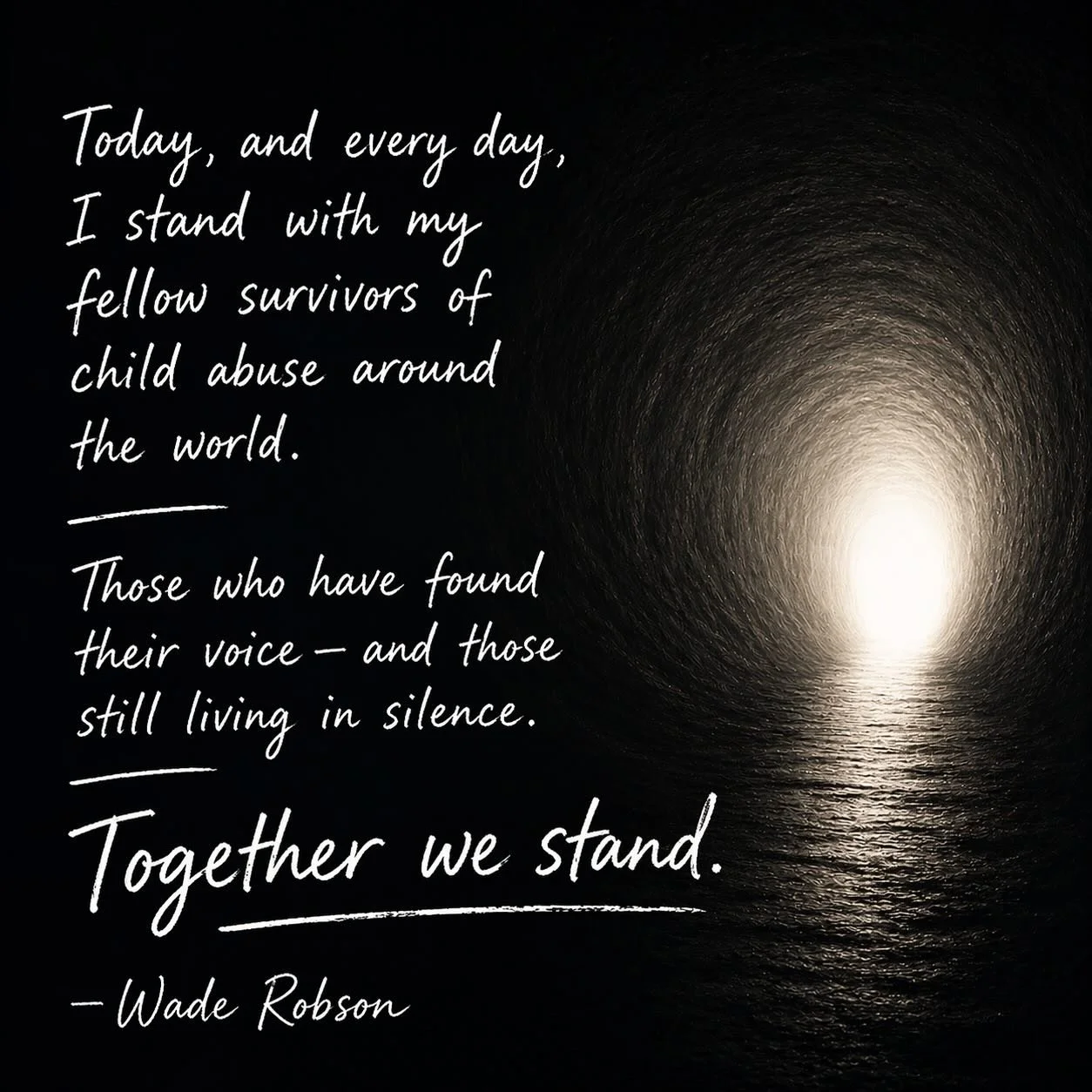


What if winning could become a path to growth, rather than a way to prove that we are worthy of love?